9 Essential Decor and Style Ideas for Small Spaces
A small space has a strange way of teaching you discipline. It doesn’t tolerate excess, it exposes clutter immediately, and it quietly demands that everything earn its place. Yet, within those constraints lies a kind of creative freedom that larger homes sometimes lack. When every corner matters, design becomes intentional. Choices become thoughtful. And the end result, when done right, can feel more personal, more refined, and surprisingly more luxurious than sprawling spaces filled without purpose.
This isn’t about cramming more into less. It’s about understanding how space behaves, how light travels, how colors influence mood, and how objects can serve more than one role. Small-space living is not a limitation—it’s a design challenge, and a rewarding one.
What follows are nine essential decor and style ideas that don’t just “make do” with small spaces, but transform them into places that feel expansive, layered, and deeply comfortable.
- Let light do the heavy lifting
Natural light is the closest thing to a free renovation. It expands a room without moving a single wall. In a small space, light is not just a feature—it’s a strategy.
Start by observing how light enters your room throughout the day. Morning light tends to be cooler and softer, while afternoon light is warmer and more intense. Position your most-used areas—like seating or workspaces—where the light naturally falls. It makes the space feel alive.
Heavy curtains can suffocate a room. Instead, opt for sheer fabrics or light-filtering blinds that maintain privacy while allowing sunlight to pass through. If privacy isn’t a concern, even leaving windows bare can create a clean, open look.
Mirrors can amplify light in subtle ways. Placing a mirror opposite a window reflects both light and the view, creating depth. It’s not about filling walls with mirrors, but placing one or two thoughtfully so they feel like extensions of the room rather than decorations.
Artificial lighting matters just as much. Overhead lighting alone often flattens a space. Layer your lighting—table lamps, wall sconces, floor lamps—so the room has pockets of warmth. A small room lit from multiple sources feels larger than one lit from a single point.
- Choose furniture that earns its footprint
In a small space, furniture isn’t just about aesthetics. It’s about efficiency.
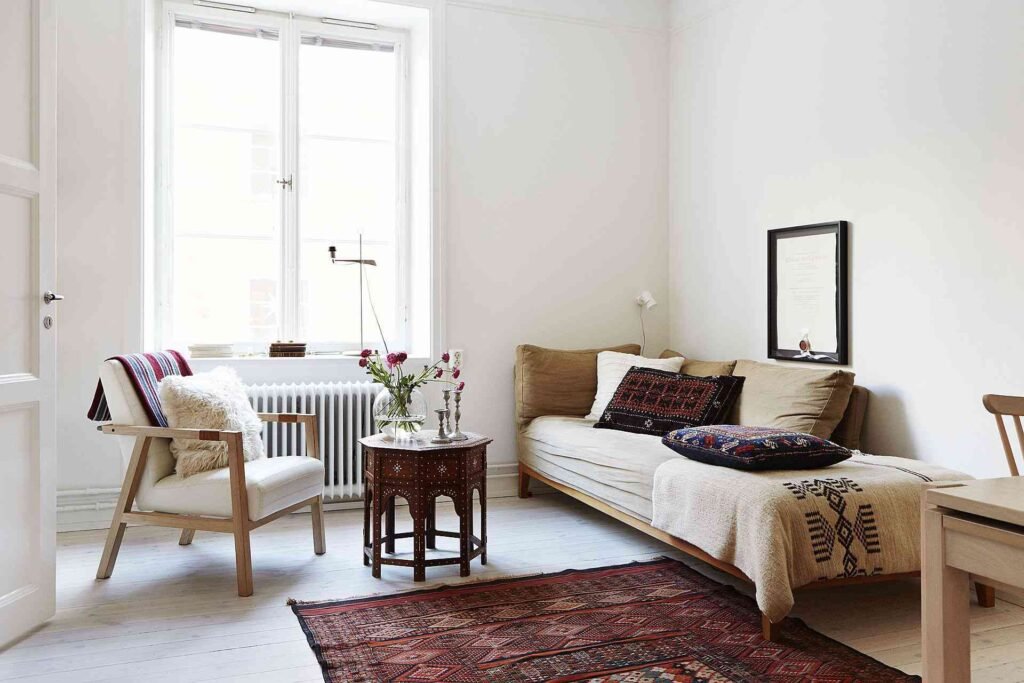
A bulky sofa might look inviting in a showroom but can dominate a compact living room. Instead, look for pieces with slimmer profiles, raised legs, and open space beneath them. This visual lightness helps maintain a sense of openness.
Multi-functional furniture is where small-space design becomes clever. A coffee table with storage inside, a bed with drawers underneath, or a foldable desk that disappears when not in use—these are not gimmicks. They are practical solutions that reduce clutter without sacrificing comfort.
Avoid the temptation to fill every wall with furniture. Negative space is not wasted space; it’s breathing room. A room with fewer, well-chosen pieces often feels more luxurious than one packed with options.
There’s also something to be said about flexibility. Lightweight chairs that can be moved easily, nesting tables that expand when needed, or benches that double as seating and storage allow the room to adapt to different situations.
- Think vertically, not just horizontally
When floor space is limited, the instinct is often to reduce everything. But the real opportunity lies upward.
Walls are often underused in small homes. Tall shelving units draw the eye upward, creating the illusion of height. Even a simple arrangement of floating shelves can turn an empty wall into both storage and display.
Vertical storage doesn’t mean stacking things randomly. It means organizing with intention. Keep frequently used items within easy reach and reserve higher shelves for things you don’t need daily.
Artwork can also play into this vertical strategy. Instead of placing everything at eye level, consider a vertical gallery arrangement that leads the gaze upward. It changes how the room is perceived.
Even curtains can contribute. Hanging them closer to the ceiling rather than directly above the window elongates the walls visually. It’s a small adjustment that makes a noticeable difference.
- Use color to shape perception
Color is one of the most powerful tools in small-space design, but it’s often misunderstood.
Light colors are known to make spaces feel larger, but that doesn’t mean everything has to be white. Soft neutrals, pale greys, muted pastels—all of these can create an open feel without becoming sterile.
That said, darker tones are not the enemy. Used strategically, they can add depth and sophistication. A single dark accent wall, for instance, can make the rest of the room feel brighter by contrast.
Consistency matters more than the specific color. When walls, furniture, and decor share a cohesive palette, the eye moves smoothly across the space, making it feel unified rather than fragmented.
Patterns should be used with care. Large, busy patterns can overwhelm a small room, but subtle textures or small-scale prints can add interest without crowding the space visually.
- Keep clutter invisible
Clutter is the quickest way to make a small space feel even smaller. But the solution isn’t to own less—it’s to store smarter.
Closed storage is your best ally. Cabinets, baskets, boxes, and drawers hide the visual noise that can overwhelm a room. Open shelving should be curated carefully, displaying only what adds to the space rather than everything you own.
Adopt a habit of rotation. Not everything needs to be on display all the time. Swapping out decor items periodically keeps the space fresh without adding more.
There’s also value in defining zones, even in a single room. A small rug can anchor a seating area, while a different texture or color can define a workspace. When everything has a designated place, clutter becomes easier to control.
- Create depth with layers
A small room doesn’t have to feel flat. In fact, layering is what gives it character.
Start with the basics—a neutral base for walls and larger furniture. Then build layers through textiles, textures, and smaller decor pieces. A throw blanket, a textured cushion, a woven rug—these elements add warmth and dimension.
Mixing materials is key. Wood, metal, fabric, glass—each interacts with light differently, creating subtle contrasts that make the room feel richer.
Layering also applies to decor placement. Instead of lining everything up neatly, overlap objects slightly. A lamp in front of a framed print, a plant beside a stack of books—these small compositions make the space feel lived-in and natural.
- Make every corner count
Corners are often overlooked, yet they hold untapped potential in small spaces.
A corner can become a reading nook with a compact chair and a small lamp. It can host a vertical shelf, a plant stand, or even a tiny desk setup. These micro-areas add function without requiring much space.
Even awkward corners can be turned into features. A tall plant can soften sharp angles, while a corner shelf can turn an unused spot into storage.
The idea is not to fill every corner, but to recognize which ones can enhance the room’s usability and charm.
- Bring in life with greenery
Plants do something that furniture and decor alone cannot—they bring life into a space.
Even a single plant can change the atmosphere of a room. It adds color, texture, and a sense of freshness. In small spaces, choose plants that suit the scale—compact varieties for shelves, trailing plants for height, or a single statement plant for impact.
If maintenance is a concern, low-care plants are widely available. The goal is not to create a jungle, but to introduce a natural element that softens the room.
Placement matters. A plant near a window feels natural, while one on a shelf can add visual interest at different heights. Hanging planters are another way to add greenery without using floor space.
- Reflect your personality without overcrowding
Perhaps the most important principle is this: a small space should still feel like yours.
Minimalism is often associated with small living, but it doesn’t mean removing everything personal. It means choosing what matters most and displaying it thoughtfully.
A few meaningful pieces—a favorite artwork, a cherished photograph, a unique object—can define the space more than dozens of generic decorations.
Editing is an ongoing process. As your taste evolves, so should your space. Removing what no longer resonates makes room for what does.
There’s a quiet confidence in a well-edited room. It doesn’t try to impress with quantity; it invites attention through intention.
—
A small space is not just a reduced version of a larger home. It operates differently. It demands awareness—of scale, of light, of movement. But in return, it offers something special: a space where every detail matters, where design choices feel deliberate, and where comfort is crafted rather than assumed.
When approached thoughtfully, a small room doesn’t feel limiting. It feels complete.
—
FAQs
- How can I make a small room look bigger without renovating?
Focus on light, color, and furniture placement. Use mirrors to reflect light, choose lighter tones for walls, and avoid overcrowding. Keeping pathways clear and using multi-functional furniture also helps create a sense of openness. - Is it okay to use dark colors in a small space?
Yes, but in moderation. Dark colors can add depth and contrast. Consider using them as accents or on a single wall rather than throughout the entire room. - What type of furniture works best for small spaces?
Furniture with slim profiles, raised legs, and built-in storage works best. Multi-functional pieces like sofa beds, storage ottomans, and foldable tables are especially useful. - How do I deal with clutter in a small home?
Use closed storage solutions to hide clutter. Keep only essential or meaningful items on display and regularly declutter to maintain a clean and organized look. - Can I decorate a small space without making it feel crowded?
Yes. Focus on a few well-chosen decor items rather than many small ones. Use layering, textures, and cohesive color schemes to add interest without overcrowding. - Are plants suitable for very small rooms?
Absolutely. Choose smaller or low-maintenance plants and place them strategically—on shelves, windowsills, or hanging planters—to add life without taking up valuable floor space.