11 Easy Kitchen and Bath Changes I Tried Last Month
There’s something oddly satisfying about making small changes at home and realizing, a week later, that daily life feels easier in ways you didn’t expect.
That was basically my month.
I hadn’t planned to “refresh” anything. I wasn’t working with a renovation budget, I wasn’t scrolling for dramatic before-and-after inspiration, and I definitely wasn’t trying to start a full home project. What actually happened was much less glamorous and much more useful: I got mildly annoyed with a handful of things in my kitchen and bathroom, changed them one by one, and ended up liking the result enough to write it all down.
None of these updates were expensive. None required a contractor. Most took less than an hour. A few took ten minutes and immediately made me wonder why I had waited so long.
What I liked most was that these changes didn’t make the rooms look like someone staged them for photos. They made them easier to use. Cleaner. Less cluttered. A little calmer. And honestly, that mattered more.
So here are the 11 easy kitchen and bath changes I tried last month—the ones that were simple, affordable, and surprisingly worth it.
1. I swapped out my cabinet hardware
This was the change I expected to care about the least, and somehow it made one of the biggest visual differences.
My kitchen cabinet handles were functional, but they had that slightly dated, builder-grade look that tends to disappear until the day you suddenly notice it and can’t unsee it. Same story in the bathroom. Nothing was broken. Everything just looked tired.
I replaced the handles and drawer pulls with simpler hardware in a warmer finish. Nothing ornate. Just cleaner lines and a shape that felt more current.
It took an afternoon, a screwdriver, and a little patience.
What changed wasn’t just the look. The cabinets felt better to use. The new pulls were easier to grip, especially on drawers I open constantly. It’s one of those details that seems cosmetic until you touch it twenty times a day.
A quick note if you try this: measure everything before ordering. Hole spacing matters more than enthusiasm.
What surprised me most was how much the room looked updated without changing anything else. Same cabinets. Same counters. Totally different feel.
2. I added under-sink organizers in both rooms
This was less exciting, visually speaking, but maybe the most useful change on the list.
The cabinet under my kitchen sink had become a chaotic mix of spray bottles, extra sponges, trash bags, dishwasher tabs, and things I forgot I owned. The bathroom sink wasn’t much better—backup toothpaste, hair products, random travel items, first-aid extras, and several mystery objects with no clear purpose.
I added simple under-sink organizers with pull-out sections, and the difference was immediate.
No more crouching and blindly reaching into the back.
No more knocking over three things to grab one thing.
No more buying duplicates because I couldn’t see what I already had.
The biggest win was visibility. Once everything had a place, both cabinets became much easier to maintain. I stopped treating them like storage voids and started using them like actual systems.
It’s not glamorous, but this one paid off fast.
3. I replaced the kitchen faucet aerator
This was one of those tiny changes that makes you feel absurdly competent.
My kitchen faucet had slowly become annoying in the way household things often do: not enough pressure, inconsistent spray, slight splatter, generally more irritating than broken. I had gotten used to it, which in hindsight was unnecessary.
I replaced the faucet aerator.
That was it.
It took maybe ten minutes, and suddenly the water flow was smoother, cleaner, and noticeably better. Less splash. Better pressure. More controlled rinse. Washing dishes became marginally less annoying, which, given how often dishes appear in a kitchen, is not nothing.
It was inexpensive, easy, and weirdly satisfying.
The bathroom faucet got the same treatment a few days later for exactly the same reason.
Tiny fix. Disproportionately useful result.
4. I switched to matching dispensers
This was a purely aesthetic decision that ended up making the counters feel much less cluttered.
In the kitchen, I had dish soap, hand soap, and lotion all sitting out in unrelated bottles with different colors, labels, and shapes. The bathroom was similar: hand soap, skincare, cotton pads, and whatever else had slowly migrated onto the counter.
Nothing was technically messy, but visually it felt noisy.
I moved the everyday products into matching dispensers and simple containers.
That was enough to make both spaces feel calmer almost immediately.
Same products. Same routines. Less visual clutter.
This is probably the easiest “upgrade” on the list because it changes nothing functional, but somehow the room feels more intentional. It also made wiping counters easier because there were fewer awkward bottles to move around.
I used to think decanting products was the kind of thing people do only for photos. Turns out it’s also useful when you’re tired of staring at packaging.
5. I changed the bathroom mirror lighting
This one made a bigger difference than I expected, especially in the mornings.
My bathroom lighting wasn’t terrible, but it had that common overhead-only setup that manages to be both too bright and somehow unhelpful. Fine for existing. Not ideal for shaving, skincare, makeup, or any task involving an actual mirror.
Instead of replacing the fixture entirely, I changed the bulbs and added softer side lighting nearby.
That alone fixed most of the problem.
The room became less harsh, the mirror became easier to use, and the entire space felt less clinical. It’s hard to overstate how much lighting changes the mood of a bathroom. Bad lighting makes even a clean bathroom feel sterile. Better lighting makes it feel finished.
The practical benefit was immediate.
The cosmetic benefit was a bonus.
I should have done this sooner.
6. I added a narrow rolling cart in the bathroom
This was one of those “why did I never think of this?” purchases.
There was a slim unused gap in the bathroom that had been doing absolutely nothing except collecting dust and occasionally trapping a dropped hair tie. I added a narrow rolling cart there and used it for overflow storage.
Now it holds extra toilet paper, cleaning supplies, tissues, and backup toiletries.
Nothing groundbreaking.
Extremely useful.
What I liked most was that it used vertical space without making the room feel crowded. It also gave the less attractive necessities a home that wasn’t the countertop, the sink edge, or the floor.
In a small bathroom, that matters more than people admit.
7. I upgraded the showerhead
This was the most immediately noticeable change on the entire list.
The old showerhead technically worked, but in the same way a weak hotel shower technically works: functional, disappointing, and easy to ignore until you use a better one somewhere else.
I replaced it with a simple upgraded showerhead—nothing extravagant, just better pressure, better spray coverage, and a cleaner design.
Instant improvement.
It made the shower feel less like a utility and more like an actual reset at the end of the day. Better water distribution, easier rinsing, less fiddling.
This wasn’t a luxury-level change. It was a quality-of-life change.
And it made an ordinary routine feel noticeably better.
That’s usually the sweet spot.
8. I cleared the countertops more aggressively
This cost nothing and may have made the biggest difference visually.
I removed almost everything from both the kitchen and bathroom counters, then added back only what I used daily.
That was the whole experiment.
What stayed:
- hand soap
- one tray
- paper towels in the kitchen
- toothbrush essentials in the bathroom
- one small everyday container in each room
What left:
- duplicates
- “temporary” items that had become permanent
- products I rarely used
- decorative clutter I had stopped noticing
- random objects with no business living on a counter
The rooms immediately looked cleaner, even before they were cleaned.
That’s the trick with visual clutter. It makes a room feel messier than it is.
Clearing surfaces didn’t just improve the look. It made both rooms easier to wipe down, easier to reset, and much less mentally busy.
I’m now more ruthless about what earns counter space.
9. I added peel-and-stick backsplash behind the sink
I was skeptical about this one.
Peel-and-stick anything tends to sound either brilliant or regrettable, with very little middle ground. But I had a small blank stretch behind the bathroom sink and another in the kitchen that felt unfinished, so I tried it.
The key was keeping expectations realistic and the application area small.
I wasn’t trying to fake tile across an entire room. I was trying to add a little texture and make the sink area feel more finished.
It worked surprisingly well.
The kitchen got a subtle visual lift.
The bathroom looked less plain.
Both were easier to wipe down.
Preparation mattered more than installation. Clean wall, careful measuring, slow placement.
It’s not a forever solution, but it doesn’t need to be.
For a quick update, it did exactly what I wanted.
10. I replaced old bath linens and kitchen towels
This was less about design and more about admitting that some things had simply overstayed their welcome.
I replaced:
- flattened bath towels
- worn hand towels
- kitchen towels that no longer absorbed anything
- the one washcloth that should have retired months ago
The visual difference was nice, sure. Fresh textiles always help.
But the practical difference was better.
New towels absorb better.
They feel cleaner.
They dry faster.
They make the room feel cared for.
This is one of those updates that sounds too boring to mention until you do it and immediately notice the upgrade every single day.
Not everything needs to be dramatic to be worth replacing.
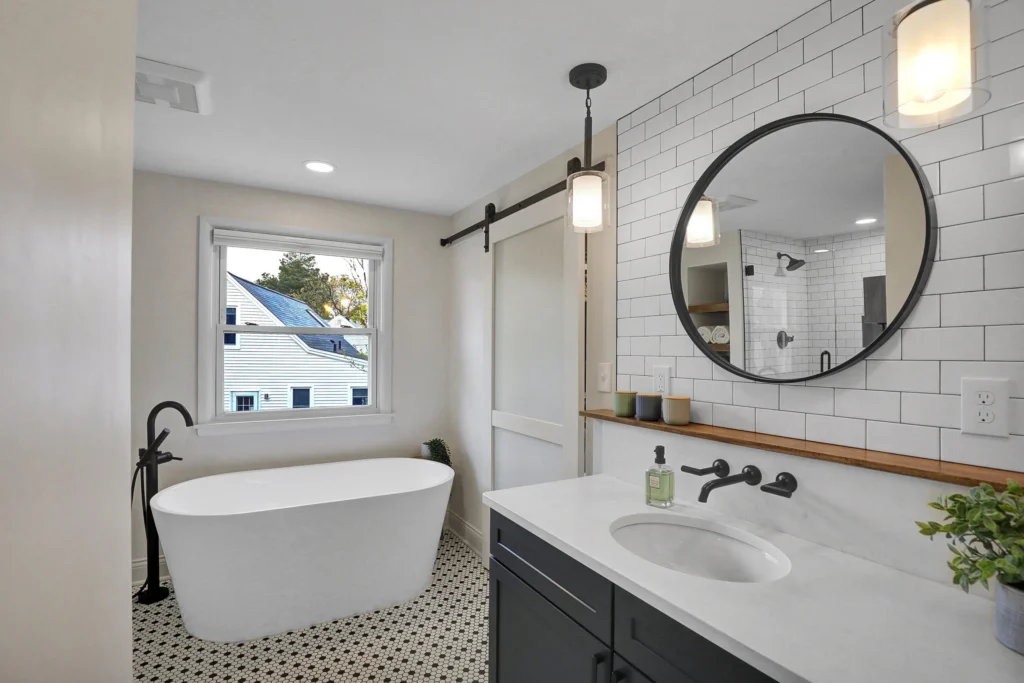
11. I put everything on trays
This was the small organizing trick that quietly pulled everything together.
I added trays in both rooms—not decorative in a fussy way, just useful.
One in the kitchen for soap and sink essentials.
One in the bathroom for hand soap, lotion, and daily-use items.
One small catch-all for the things that tend to drift.
Trays do something simple but effective: they turn loose objects into one contained zone.
That makes everything look tidier, even when the actual number of items hasn’t changed.
They also make cleaning easier. Instead of moving six separate things, you move one tray.
Tiny effort.
Consistently better result.
This may be the least exciting change here, and I’d still recommend it immediately.
What actually made the biggest difference
After trying all 11, the biggest improvements weren’t necessarily the most visible ones.
The best changes were the ones that solved recurring friction:
- better storage
- fewer things on the counter
- easier cleaning
- improved lighting
- fixtures that worked better
That was the pattern I noticed all month.
The updates I appreciated most weren’t the ones that looked impressive in theory. They were the ones that quietly made the rooms easier to live with.
That’s probably the most useful filter for any kitchen or bath change:
Does it make the room easier to use?
If yes, it’s probably worth doing.
A prettier soap dispenser is nice.
A drawer that opens better is nicer.
A shower that works better every morning is nicer than both.
The most successful changes weren’t dramatic. They were practical enough to last.
And honestly, that’s what made them feel like real upgrades instead of temporary fixes.
What I’d do differently next time
A few things worked instantly.
A few things I’d tweak.
I’d measure more carefully before ordering organizers. Under-sink storage is less forgiving than it looks, especially around plumbing.
I’d also make lighting changes earlier in the process. It had one of the biggest impacts for relatively little effort, and I underestimated how much it affected the feel of the room.
And I’d skip overbuying containers in the name of “organization.” It’s very easy to create prettier clutter.
That’s probably the main lesson from this whole month:
organization works best when it reduces decisions, not when it adds more stuff to manage.
The goal isn’t to fill a room with clever storage products.
It’s to make everyday use simpler.
That distinction matters.
Final thoughts
I didn’t renovate anything last month.
I didn’t replace cabinets.
I didn’t retile walls.
I didn’t change layouts.
I didn’t spend enough to justify calling it a remodel.
But both rooms feel better now.
They’re easier to clean.
Easier to use.
Less cluttered.
More functional.
A little calmer.
And that ended up mattering more than any dramatic transformation would have.
The most effective kitchen and bath changes usually aren’t the loud ones. They’re the ones that remove friction from ordinary routines—the ones you notice when your morning feels smoother, your counters stay cleaner longer, or your evening cleanup takes less effort.
Those are the changes that last.
And after trying all 11, that was the real takeaway:
small upgrades are underrated, especially when they make everyday life easier.
FAQs
1. What is the easiest kitchen update with the biggest impact?
Clearing the countertops is probably the easiest change with the fastest payoff. It costs nothing, takes less than an hour, and instantly makes the kitchen look cleaner and more organized. Swapping cabinet hardware is a close second if you want a stronger visual change.
2. Are small bathroom updates actually worth it?
Yes, especially when they improve how the room functions. Better lighting, improved storage, and a better showerhead make a bathroom easier to use every day. Even small changes can noticeably improve comfort and convenience.
3. What inexpensive kitchen change helps the most?
Replacing the faucet aerator is one of the cheapest and most useful kitchen upgrades. It improves water flow, reduces splashing, and makes washing dishes easier without requiring any major installation.
4. How do I make my bathroom look better without renovating?
Start with simple changes: reduce countertop clutter, upgrade towels, improve lighting, and use matching containers or trays. These small updates make the room feel cleaner and more intentional without requiring construction.
5. Which update made the biggest daily difference?
The showerhead upgrade had the most immediate daily impact. It improved water pressure, made showers more comfortable, and noticeably changed a routine I repeat every day.
6. How can I refresh my kitchen and bathroom on a budget?
Focus on small functional upgrades first: cabinet hardware, organizers, lighting, fresh linens, trays, and better fixtures. These changes are affordable, easy to install, and improve both appearance and daily use without requiring a full remodel.