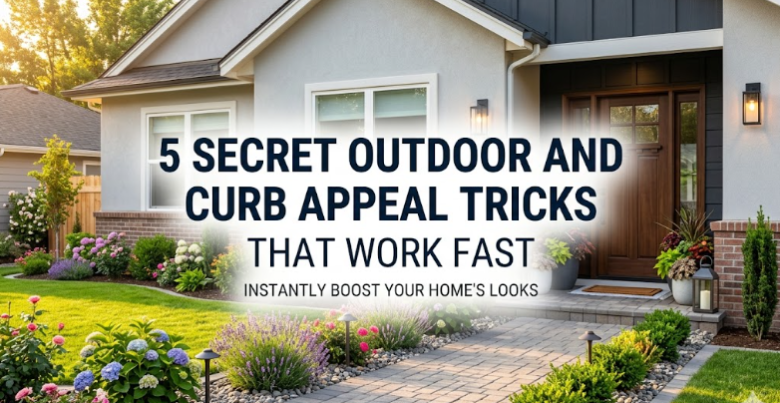
5 secret outdoor and curb appeal tricks that work fast
There’s a quiet kind of magic in the way a home greets the outside world. Before anyone steps inside, before a door opens or a word is spoken, the exterior has already told a story. Sometimes that story feels tired, neglected, or just a bit forgotten. The good news is that it doesn’t take a massive renovation budget or months of work to rewrite that story. In fact, a handful of small, intentional changes can shift the entire mood of a space in a matter of hours.
What follows isn’t a list of obvious fixes like mowing the lawn or repainting the entire house. These are subtler, often overlooked ideas that create a disproportionate impact. They are fast, surprisingly affordable, and rooted in how people actually experience a home from the outside—through emotion, memory, and small visual cues.
- The power of a defined entry moment
Most people think of a front door as just that—a door. But the area surrounding it can become something far more meaningful: a transition point, a moment that signals arrival.
Start by asking a simple question: where does the eye land when someone approaches your home? If the answer is “nowhere in particular,” then you’ve found your opportunity.
Creating an entry moment doesn’t require a major overhaul. It’s about framing what already exists. A pair of planters placed symmetrically on either side of the door instantly creates balance. They don’t have to be expensive. Even simple pots painted in a consistent color can do the trick. The key is consistency—same size, same shape, same placement.
Lighting is another element that quietly transforms this space. A warm-toned bulb in a porch light can make everything feel more inviting, especially in the evening. If there’s no existing fixture, solar-powered lights along the path can guide visitors without requiring any wiring.
Then there’s texture. A new doormat layered over a slightly larger outdoor rug adds depth in a way most people don’t expect. It’s a small detail, but it creates a sense of intention. Suddenly, the entry doesn’t feel like an afterthought—it feels designed.
What’s interesting is how quickly this change registers. People might not consciously note each element, but they feel the difference. The home appears more cared for, more welcoming, and somehow more complete.
- Strategic contrast instead of full repainting
Repainting an entire exterior is time-consuming and expensive. But contrast—applied in the right places—can create a similar sense of renewal in a fraction of the time.
Look at the fixed elements of your home: the trim, shutters, railings, and even the front door. These are opportunities to introduce contrast without overwhelming the overall look.
A front door painted in a bold, complementary color can become a focal point that draws attention away from less appealing areas. Deep navy, muted green, or even a warm terracotta can add character without feeling overdone. The key is choosing a color that works with the existing palette rather than fighting it.
Trim is another overlooked element. Refreshing it with a crisp coat of paint—often just white or a slightly off-white shade—can sharpen the entire exterior. It creates clean lines that make everything else look more intentional.
Even small touches like painting the mailbox, house numbers, or porch railing can contribute to this sense of contrast. These details act like punctuation marks in the visual language of your home. They define edges, highlight features, and guide the eye.
The beauty of this approach is that it doesn’t require perfection. In fact, slight imperfections can add character. What matters is the overall effect—a home that feels more dynamic, more alive, and more thoughtfully put together.
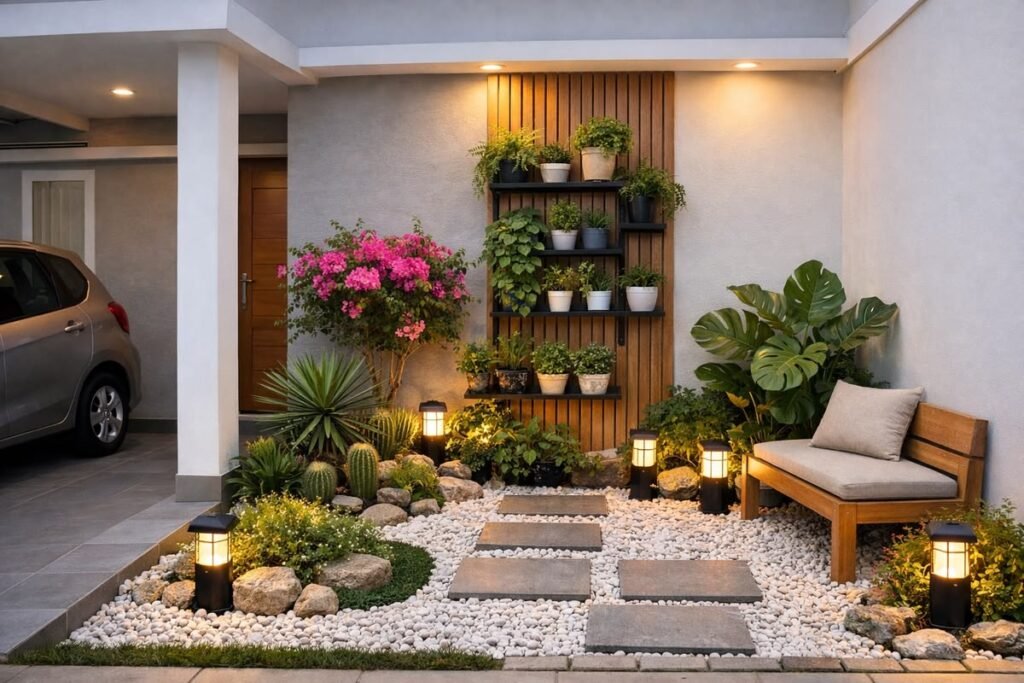
- The illusion of abundance through layering greenery
A single plant can look lonely. A cluster of plants, even if they’re small, creates the impression of abundance.
This trick is less about adding more and more plants, and more about arranging them in a way that feels natural and full. Think in layers: taller plants at the back, medium-height ones in the middle, and smaller ones in front.
If you’re working with a limited budget, consider mixing real and artificial plants. High-quality faux greenery can fill gaps and maintain a lush look even when real plants are out of season.
Containers play a significant role here as well. Instead of scattering mismatched pots around, choose a few that share a common color or material. This creates cohesion, making the arrangement feel intentional rather than random.
Another effective approach is repetition. Using the same type of plant in multiple spots creates rhythm. For example, placing identical pots along a walkway or near steps can guide the eye and create a sense of order.
What’s fascinating is how this layering technique changes perception. Even a small space can feel more expansive and vibrant when greenery is arranged thoughtfully. It taps into a natural human response—we associate lushness with care, vitality, and comfort.
- Cleaning as a design tool, not just maintenance
Cleaning is often seen as a chore, something to be done out of necessity. But when approached differently, it becomes one of the fastest ways to enhance curb appeal.
Pressure washing, for instance, can completely transform surfaces. Driveways, walkways, and even exterior walls can look years younger after a thorough cleaning. The contrast between cleaned and uncleaned areas is often dramatic.
Windows are another key element. Clean windows reflect light better, making the entire exterior feel brighter. It’s a subtle change, but it has a noticeable impact, especially during the day.
Don’t overlook smaller details like door handles, light fixtures, and house numbers. Polishing or replacing these items can elevate the overall look without requiring significant effort.
Even something as simple as sweeping the entryway and removing debris can make a difference. It signals care and attention, which people pick up on almost immediately.
What makes cleaning so powerful is its immediacy. There’s no waiting period, no drying time beyond the obvious. The results are visible right away, which makes it one of the most satisfying improvements you can make.
- Creating a sense of life with small, intentional accents
A home that feels lived in—without appearing cluttered—has a certain charm that’s hard to replicate.
This is where small accents come into play. A chair on the porch, a folded blanket draped casually over it, or a small side table with a plant can suggest that the space is used and enjoyed.
Seasonal touches can also add interest. A simple wreath, a few lanterns, or even a bowl of decorative stones can change the mood without requiring much effort.
The key is restraint. Too many accents can quickly become overwhelming. Instead, choose a few items that complement each other and the overall style of your home.
Sound can even play a role here. A small wind chime or the gentle trickle of a water feature can create an auditory layer that enhances the experience of the space.
These accents work because they tap into emotion. They make a home feel approachable, comfortable, and human. It’s not just about how the space looks—it’s about how it feels.
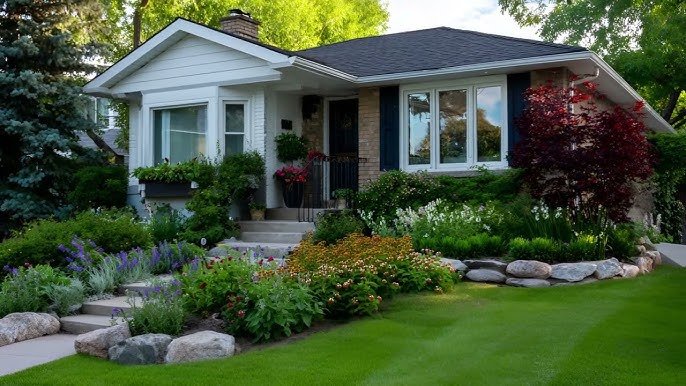
Bringing it all together
What ties these five tricks together is their focus on perception. They don’t rely on large-scale changes or significant investments. Instead, they work by shifting how the home is experienced.
A defined entry draws attention. Strategic contrast adds visual interest. Layered greenery creates a sense of abundance. Cleaning reveals the potential that’s already there. And small accents bring warmth and life.
Individually, each of these changes can make a difference. Combined, they can transform a home’s exterior in a way that feels both immediate and lasting.
The best part is that these improvements don’t require perfection. They’re adaptable, flexible, and forgiving. You can start with one, see how it feels, and build from there.
Over time, these small changes add up. They create a home that not only looks better but feels better—a place that welcomes both residents and visitors with quiet confidence.
Frequently asked questions
- How quickly can I see results from these curb appeal tricks?
Most of these changes can be completed in a single day or over a weekend. Cleaning, rearranging plants, and adding small accents provide immediate visual improvement. - Do I need a big budget to improve curb appeal?
No. Many of these ideas rely on rearranging what you already have or making small, affordable purchases like paint, planters, or lighting. - What’s the most important area to focus on first?
The entryway is usually the best starting point. It naturally draws attention and sets the tone for the rest of the home. - Can these tricks work for small homes or apartments?
Yes. Even a small porch, balcony, or entry area can benefit from defined spaces, greenery, and thoughtful accents. - How do I choose the right colors for contrast?
Look at your home’s existing colors and choose something that complements rather than clashes. Neutral tones with one bold accent often work well. - How do I maintain these improvements over time?
Regular cleaning, occasional plant care, and swapping out seasonal accents can keep your exterior looking fresh without requiring major effort.