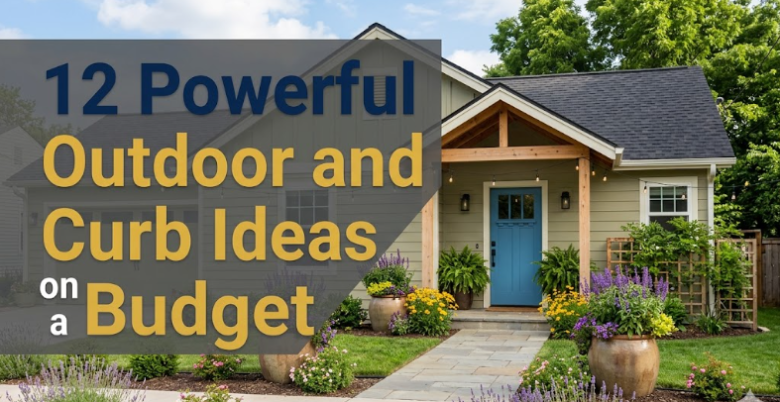
12 powerful outdoor and curb ideas on a budget
There is something quietly powerful about stepping outside your home and feeling proud of what you see. It doesn’t have to be a mansion, nor does it require a professional landscaper or a five-figure renovation. The truth is, curb appeal is less about money and more about intention. It’s about shaping the space where your home meets the world, where first impressions are formed in seconds but linger much longer.
This guide is not just a list of ideas—it’s a collection of practical, tested, and deeply human approaches to transforming outdoor spaces on a budget. You’ll find strategies, small experiments, and creative workarounds that go beyond surface-level advice. These are ideas you can adapt, mix, and grow over time.
Let’s walk through them, one by one.
- redefine your entry point with intention
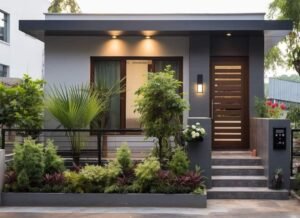
Your front door is not just a door. It’s a signal. It tells visitors—and even you—what kind of home lies beyond it.
A fresh coat of paint can completely shift the tone. Bold colors like deep blue, forest green, or even a muted terracotta can stand out beautifully without feeling overwhelming. If paint isn’t an option, focus on the surrounding elements: clean the door thoroughly, polish the handle, and replace outdated fixtures.
Add symmetry if possible. Two small potted plants, one on each side, instantly create balance. Even mismatched pots can look cohesive if painted in the same color.
Small detail exercise:
Stand across the street and look at your entrance for 10 seconds. What draws your eye? What feels neglected? That quick observation often reveals exactly where to start.
- create a layered lighting effect
Lighting is often overlooked, yet it’s one of the most cost-effective upgrades you can make.
Instead of relying on a single porch light, think in layers:
- pathway lights (solar-powered options are inexpensive and easy to install)
- wall-mounted fixtures
- subtle string lights for warmth
The goal is not brightness—it’s atmosphere. A softly lit path feels welcoming and safe. It also highlights the shape of your space, even at night.
Budget tip:
Buy lights in phases. Start with the most important area (like the walkway), then expand gradually.
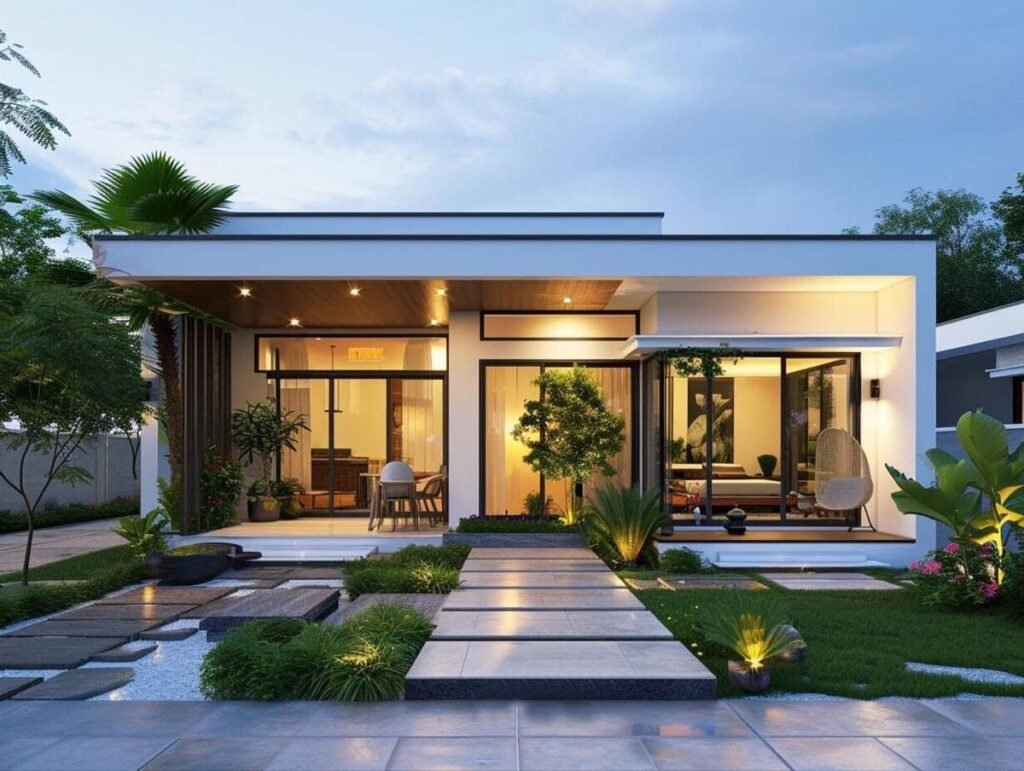
- revive your walkway with simple materials
Your walkway doesn’t need to be replaced to look new. Often, it just needs attention.
Power washing alone can make a dramatic difference. If that’s not accessible, a stiff brush and soapy water still go a long way.
For a creative touch:
- line the edges with inexpensive bricks or stones
- fill cracks with gravel or decorative pebbles
- add stepping stones where the path feels too plain
Try this:
Sketch your walkway on paper and imagine how it would look with borders, curves, or accents. Even small changes can shift the entire feel.
- embrace container gardening
You don’t need a full garden to enjoy greenery. Containers give you flexibility, control, and affordability.
Use what you already have:
- old buckets
- wooden crates
- unused kitchen containers
Paint them, group them, and vary their heights. The visual interest comes from contrast—tall plants next to trailing ones, leafy greens beside colorful blooms.
Starter plant ideas:
- herbs (practical and attractive)
- succulents (low maintenance)
- seasonal flowers (rotate throughout the year)
A cluster of 3–5 containers near your entrance can feel like a mini garden.
- define space with gravel or mulch
Bare soil or patchy grass can make a yard feel unfinished. Gravel and mulch are inexpensive ways to define space and create structure.
Use gravel for:
- pathways
- seating areas
- borders
Use mulch for:
- garden beds
- around trees
- filling empty corners
Both options reduce maintenance while adding texture. The key is to frame them—use stones, wood, or edging to keep everything contained.
- upgrade your house numbers
This might sound minor, but it’s surprisingly impactful.
Old, faded, or hard-to-read numbers can drag down the entire look of your home. Replacing them with modern, clean designs instantly adds a sense of care.
Placement matters too:
- mount them at eye level
- ensure they’re well-lit
- choose a color that contrasts with your wall
Creative twist:
Mount the numbers on a wooden board or metal plate for a custom look without custom pricing.
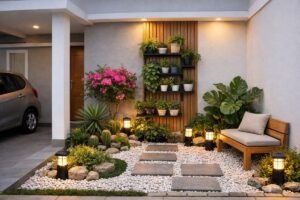
- build a simple seating corner
Even a small outdoor seating area can change how your space feels.
You don’t need expensive furniture. Try:
- repurposed wooden pallets
- second-hand chairs
- a simple bench with cushions
Add a small table or crate, and suddenly you have a place to sit, read, or enjoy tea.
The psychological effect is powerful. When a space invites you to stay, it feels more alive.
- use vertical elements for depth
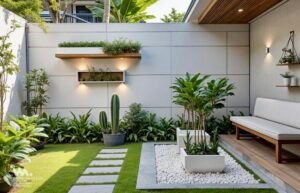
Flat spaces can feel dull. Vertical elements add dimension without taking up much room.
Options include:
- hanging planters
- wall-mounted shelves
- trellises with climbing plants
Even a simple ladder leaned against a wall, decorated with plants or lights, can create visual interest.
Think of it like this:
If everything sits at ground level, your eyes get bored. Give them something to travel upward.
- refresh fences and boundaries
Fences often fade into the background—but they frame your entire property.
A fresh coat of paint or stain can bring them back to life. Neutral tones work well, but don’t be afraid to experiment with darker shades for contrast.
If painting isn’t possible:
- clean thoroughly
- add climbing plants
- hang small decorative elements
Even partial improvements (like focusing on the front-facing section) can make a difference.
- create a focal point
Every well-designed space has something that draws attention.
This could be:
- a large plant
- a decorative pot
- a small water feature
- a piece of outdoor art
The goal is not to overwhelm, but to anchor the space.
Quick test:
If someone glances at your yard for 5 seconds, what do they notice first? If the answer is “nothing specific,” you may need a focal point.
- maintain edges and lines
Clean lines signal care. Even if your space is simple, sharp edges make it feel intentional.
Focus on:
- trimming grass along borders
- defining garden bed edges
- aligning pots and decor
This is one of the lowest-cost improvements with one of the highest returns.
Routine idea:
Spend 15 minutes once a week just refining edges. Over time, the difference becomes obvious.
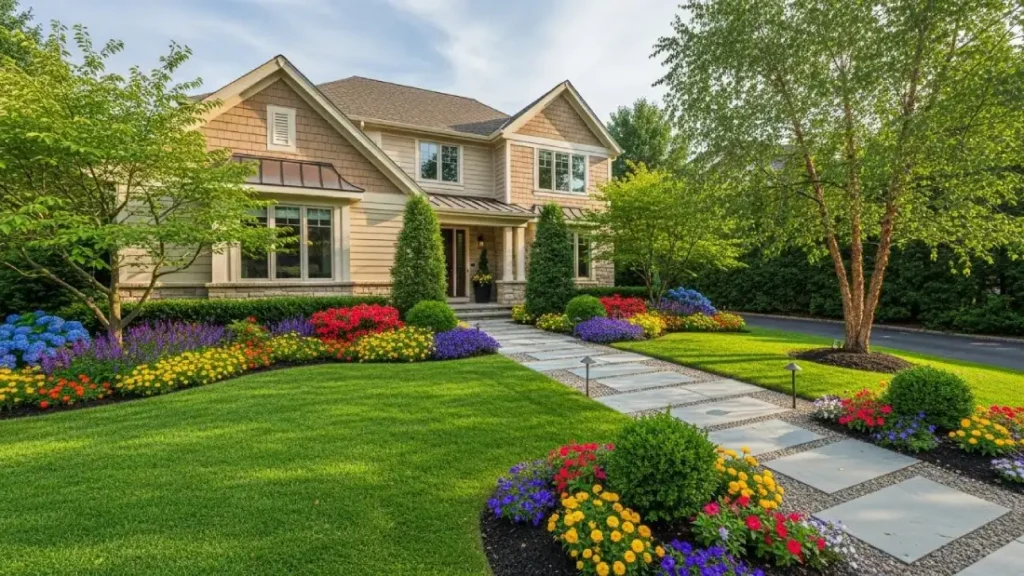
- keep it evolving, not perfect
The biggest mistake people make is trying to do everything at once.
Outdoor spaces are meant to evolve. Start small, observe what works, and adjust.
Keep a simple notebook:
- what you added
- what worked
- what didn’t
This turns your yard into an ongoing project rather than a one-time task.
You’ll notice patterns. You’ll develop preferences. And slowly, your space becomes a reflection of you—not a copy of someone else’s design.
a practical mini-plan you can follow
week 1:
clean and declutter the entire front area
week 2:
refresh the entry (door, plants, lighting)
week 3:
work on the walkway and edges
week 4:
add one focal point and one seating element
week 5 and beyond:
expand gradually—more plants, more lighting, more الشخصية
This phased approach keeps costs low and motivation high.
common mistakes to avoid
trying to copy high-end designs exactly
Luxury spaces often rely on scale and materials that aren’t budget-friendly. Instead, borrow ideas, not entire layouts.
overcrowding
More is not always better. Give elements space to breathe.
ignoring maintenance
A beautiful setup can quickly lose its charm if not maintained.
skipping planning
Even a rough sketch helps prevent wasted time and money.
faqs
- how can i improve curb appeal with almost no budget?
Start with cleaning. Wash surfaces, remove clutter, trim plants, and redefine edges. These steps cost little but create immediate impact. - what is the cheapest way to add greenery?
Container gardening using repurposed items is one of the most affordable methods. You can also propagate plants from cuttings instead of buying new ones. - how do i make a small front yard look bigger?
Use vertical elements, keep the layout simple, and avoid overcrowding. Light colors and defined edges also help create a sense of space. - are solar lights worth it?
Yes, especially for pathways and accents. They are easy to install, require no wiring, and keep energy costs at zero. - how often should i update my outdoor space?
Think of it as seasonal maintenance rather than full updates. Small changes every few months keep the space fresh without requiring major effort. - what is the most impactful single change i can make?
Refreshing your entryway—cleaning, painting, and adding plants—usually delivers the most noticeable improvement for the least cost.
In the end, transforming your outdoor and curb space is less about resources and more about perspective. When you start seeing your home’s exterior as a living, evolving canvas, even the smallest changes begin to matter. And those small changes, layered over time, create something that feels intentional, welcoming, and uniquely yours.