10 Smart Kitchen and Bath Upgrades for a Frugal Home Renovator
A kitchen or bathroom renovation has a way of making sensible people do reckless math.
It usually starts with one innocent thought: maybe the cabinets could use a refresh. Then suddenly you are comparing imported tile, debating faucet finishes, and wondering whether a heated floor is “an investment in daily wellness” or just a very expensive way to avoid cold toes.
The good news is that upgrading a kitchen or bath does not have to become a full-scale financial event. In fact, the most effective renovations rarely begin with demolition. They begin with observation. What feels dated? What functions poorly? What gets used every single day? And what can be improved without gutting the room down to studs?
That is where frugal renovation gets interesting.
A budget-conscious remodel is not about choosing the cheapest option in every category. It is about choosing the smartest one. Sometimes that means repainting instead of replacing. Sometimes it means upgrading one high-touch feature and leaving the rest alone. And sometimes it means spending slightly more now to avoid spending much more later.
In kitchens and bathrooms especially, small improvements tend to pull more weight than people expect. These are hardworking rooms. They deal with moisture, heat, mess, storage problems, and constant daily traffic. A practical upgrade in either space can improve comfort, function, maintenance, and resale appeal all at once.
The trick is knowing where to put your money.
The ten upgrades below are the ones frugal renovators return to again and again because they offer visible results, practical value, and staying power without requiring luxury-level budgets. None of them depend on trend-chasing. None require a designer’s budget. And all of them can make your kitchen or bath feel more finished, more efficient, and far more expensive than it actually was.
1. Reface or repaint cabinets instead of replacing them
Cabinet replacement is one of the fastest ways to blow up a renovation budget.
In both kitchens and bathrooms, cabinets occupy a huge amount of visual space, so homeowners often assume they must be replaced if the room looks tired. In many cases, that is unnecessary. If the cabinet boxes are structurally sound and the layout still works, refacing or repainting can deliver most of the visual payoff for a fraction of the cost.
This is one of the smartest budget moves available because cabinetry is usually less about age than appearance.
A dated oak finish, worn paint, old hardware, and grime buildup can make perfectly functional cabinets look beyond saving. But once the surfaces are cleaned, sanded, painted, and fitted with modern pulls, the entire room changes. The transformation can be dramatic enough to make countertops and backsplashes look newer too.
Refacing is especially useful when the cabinet doors themselves are the main problem. New doors and drawer fronts can be installed over existing boxes, giving you a fresh exterior without paying for a full tear-out.
Repainting works best when:
- cabinet frames are in good shape
- hinges still function well
- drawer boxes slide properly
- the existing layout is efficient
- there is no major water damage
For bathrooms, repainting a vanity is one of the highest-impact low-cost upgrades available. A fresh coat of paint, a new faucet, and updated hardware can make an older vanity feel custom.
The biggest advantage here is not just cost savings. It is waste reduction. Keeping usable cabinets out of a landfill while saving thousands is the kind of practical decision that defines a smart renovation.
Frugal takeaway: If the cabinet structure is good, keep it. Change the finish, not the footprint.
2. Upgrade the faucet before you replace the sink
People often blame the sink when what they really dislike is the faucet.
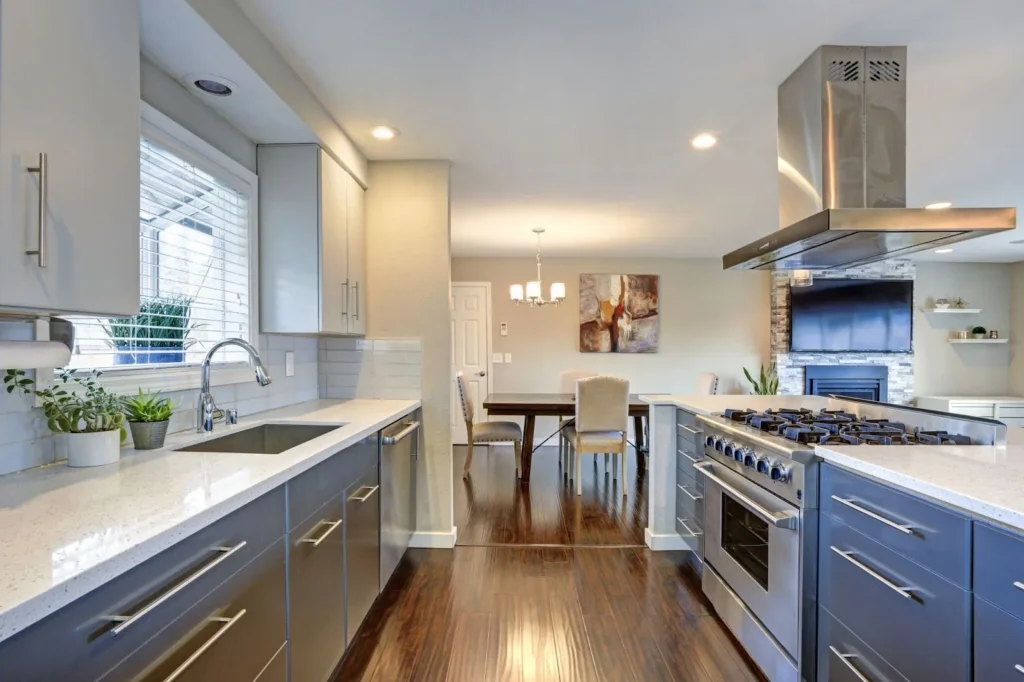
This happens in kitchens all the time. A basic builder-grade sink paired with a stiff, low-arc faucet can make the whole workstation feel cheap and inconvenient. Replace the faucet with a taller pull-down model, and suddenly the sink feels more usable, more modern, and much less irritating.
Bathrooms follow the same logic.
A dated faucet can age a vanity faster than almost anything else. Swap it for a cleaner silhouette in a durable finish and the entire countertop area looks upgraded.
This is one of the best examples of a small purchase changing daily experience. Faucets are touched constantly. You use them when your hands are messy, when you are in a hurry, when you are cleaning, cooking, shaving, washing up, or filling containers. Even a modest improvement in usability pays off every day.
What makes a faucet upgrade worth prioritizing:
- better reach and clearance
- smoother handle operation
- reduced splashing
- easier cleaning
- improved water efficiency
- stronger visual impact than many larger purchases
In kitchens, pull-down sprayers are especially useful because they improve cleanup without requiring a sink replacement. In bathrooms, single-handle faucets are often easier to use and simpler to keep clean.
If your sink is chipped, rusting, or too shallow, replacement may still make sense. But if it is merely uninspiring, start with the fixture above it.
Frugal takeaway: Upgrade the part you touch every day first. Function matters more than square inches of porcelain.
3. Install better lighting where the work actually happens
Lighting is one of the most overlooked parts of a budget renovation and one of the most transformative.
Bad lighting makes even clean rooms feel gloomy. It also makes kitchens harder to cook in and bathrooms harder to use well. Shadows around counters, dim mirrors, and weak overhead fixtures can make a room feel older and less functional than it really is.
The fix is often surprisingly affordable.
Instead of spending heavily on decorative statement fixtures, focus first on task lighting. Better light where people actually work gives a room a more polished feel immediately.
In kitchens, that usually means:
- under-cabinet lighting
- brighter sink lighting
- improved ceiling fixtures over prep zones
- warmer ambient lighting for evenings
In bathrooms, it means:
- vanity lighting at face level
- brighter mirror lighting
- improved shower lighting
- warmer general light for comfort
This is not just about aesthetics. It is practical. Better lighting improves shaving, makeup application, cooking, cleanup, and safety. It also reduces the tired, dim look common in older homes.
Under-cabinet lighting is especially effective because it makes counters brighter and backsplashes more noticeable. In bathrooms, side-mounted vanity lighting is often more flattering and useful than a single overhead fixture.
A room with average finishes and excellent lighting usually feels better than a room with expensive finishes and poor lighting.
Frugal takeaway: Before you buy prettier surfaces, make sure you can actually see them.
4. Replace hardware and hinges for a low-cost visual reset
There are upgrades that impress guests, and there are upgrades that quietly improve daily life.
New cabinet hardware does both.
Knobs, pulls, hinges, towel bars, robe hooks, toilet paper holders, and drawer glides are small details, but they shape how finished a room feels. They are touched constantly. When they are loose, mismatched, squeaky, tarnished, or dated, the room feels older no matter how recently it was painted.
This is one of the easiest and least expensive ways to modernize a kitchen or bathroom without changing major surfaces.
A consistent hardware finish creates visual order. It also makes a room feel intentional, which is often what separates a polished renovation from one that feels pieced together.
You do not need designer hardware. You need coordinated hardware.
That means:
- matching metal tones across visible fixtures
- replacing worn hinges
- updating drawer pulls for comfort
- installing sturdy towel hooks
- choosing hardware that fits the scale of the room
Soft-close hinges and drawer slides are worth considering here because they add a subtle sense of quality people notice immediately.
In bathrooms, replacing towel bars and hooks often does more than people expect. These pieces age quickly, and fresh hardware can sharpen the room with almost no labor.
Frugal takeaway: When the details feel intentional, the whole room feels upgraded.
5. Use peel-and-stick or budget tile strategically, not everywhere
Budget tile gets a bad reputation mostly because people use it badly.
The smartest frugal renovators do not try to tile everything. They use affordable tile selectively, where it creates the most visual return.
In kitchens, that often means a backsplash. In bathrooms, it usually means one focused area: behind the vanity, inside a niche, or on a small floor.
This matters because tile can become expensive fast once labor, grout, cuts, and waste are involved. Covering every available surface is rarely the smartest use of money.
A targeted tile upgrade can:
- create a focal point
- protect high-splash areas
- add texture and contrast
- modernize a room quickly
- avoid large material and labor costs
Peel-and-stick options have improved significantly and can work well in rentals, light-use bathrooms, and temporary kitchen refreshes. They are not ideal for every wet zone, but they can be a useful short-term budget solution when chosen carefully.
For longer-term durability, affordable ceramic subway tile remains one of the most cost-effective upgrades available. It is inexpensive, easy to source, and hard to make look bad.
The mistake is not choosing inexpensive tile. The mistake is overcommitting to too much of it.
Frugal takeaway: A small amount of tile in the right place does more than a lot of tile in the wrong one.
6. Add storage that solves actual problems
Storage upgrades are most valuable when they solve the annoyances you already live with.
This sounds obvious, but many renovations fail here. People add storage because they feel they should, not because the room needs it in a specific way. The result is more cabinetry, more cost, and often no real improvement in daily use.
Smart storage is targeted.
In kitchens, the biggest frustrations are usually:
- crowded lower cabinets
- wasted vertical space
- hard-to-reach corners
- cluttered counters
- disorganized drawers
In bathrooms, common problems include:
- too little under-sink organization
- nowhere to store towels
- crowded vanity drawers
- poor medicine storage
- lack of daily-use access
Frugal storage fixes often outperform expensive built-ins:
- pull-out shelf inserts
- drawer dividers
- toe-kick drawers
- open shelving in dead space
- over-toilet storage
- vertical tray dividers
- inside-door organizers
These upgrades are practical because they improve how the room works without changing its footprint.
Good storage reduces clutter, and reduced clutter makes a room look cleaner, larger, and more expensive.
That is one of the best hidden truths in renovation: organization often reads as luxury.
Frugal takeaway: Do not buy more storage. Buy smarter access to the storage you already have.
7. Choose countertops for durability, not status
Countertops have become one of the most emotionally overbought features in home renovation.
People often treat them as a status purchase, which is how modest remodels end up with wildly disproportionate slab budgets.
The smarter approach is simpler: choose a countertop that fits how you live.
That means asking:
- Does it resist stains?
- Can it handle heat?
- Is it easy to clean?
- Will it require sealing?
- Does it show every watermark?
- Can it survive ordinary use without anxiety?
For a frugal renovator, durability usually matters more than prestige.
There are several affordable countertop options that perform well without demanding luxury pricing. Laminate has improved dramatically. Butcher block can be beautiful if maintained properly. Entry-level quartz often offers the best balance of durability and maintenance for the money. Solid surface remains practical in many bathrooms.
In bathrooms especially, you can often save significantly by choosing a remnant slab for a vanity top rather than buying full-size material.
That single move can create a high-end look for much less.
A countertop should make life easier, not make you nervous about setting down a coffee mug.
Frugal takeaway: Buy the surface that works hard, not the one that sounds expensive.
8. Improve ventilation before mold makes the decision for you
Ventilation is not glamorous, which is exactly why people ignore it too long.
But in kitchens and bathrooms, poor ventilation quietly causes some of the most expensive problems in the house.
Moisture, grease, odor, peeling paint, warped cabinetry, mildew, and mold all thrive when air movement is poor. And unlike cosmetic issues, these problems become structural if ignored long enough.
This is one of the least exciting upgrades and one of the smartest.
In kitchens, a better range hood can reduce grease buildup, improve air quality, and protect nearby finishes.
In bathrooms, a properly sized exhaust fan helps control humidity, reduces mildew, and extends the life of paint, caulk, trim, and cabinetry.
This is not the kind of upgrade people post online. It is the kind they appreciate three years later.
A quiet, effective exhaust fan is worth more than many decorative upgrades because it protects everything around it.
Frugal takeaway: Spend money where it prevents bigger bills later.
9. Refresh grout, caulk, and trim before replacing major finishes
Many kitchens and bathrooms look worse than they are.
Not outdated. Not ruined. Just neglected at the seams.
Cracked caulk, stained grout, yellowing trim, and separating edges make entire rooms read as old and worn, even when the major materials are still perfectly serviceable.
This is one of the least expensive refreshes in any renovation and one of the most satisfying.
Fresh caulk around a tub, sink, backsplash, or countertop instantly sharpens the room. Clean grout or re-grouted tile can make old surfaces feel years newer. Fresh trim paint creates visual crispness that people often mistake for a more expensive remodel.
It is detail work, but detail work changes perception.
This is especially valuable in bathrooms, where failing caulk makes spaces look dingy fast. It is equally useful in kitchens where backsplash seams, sink edges, and counter joints tend to show age early.
Before replacing tile, make sure it is the tile you dislike and not the grout around it.
Frugal takeaway: Clean edges make rooms look newer than they are.
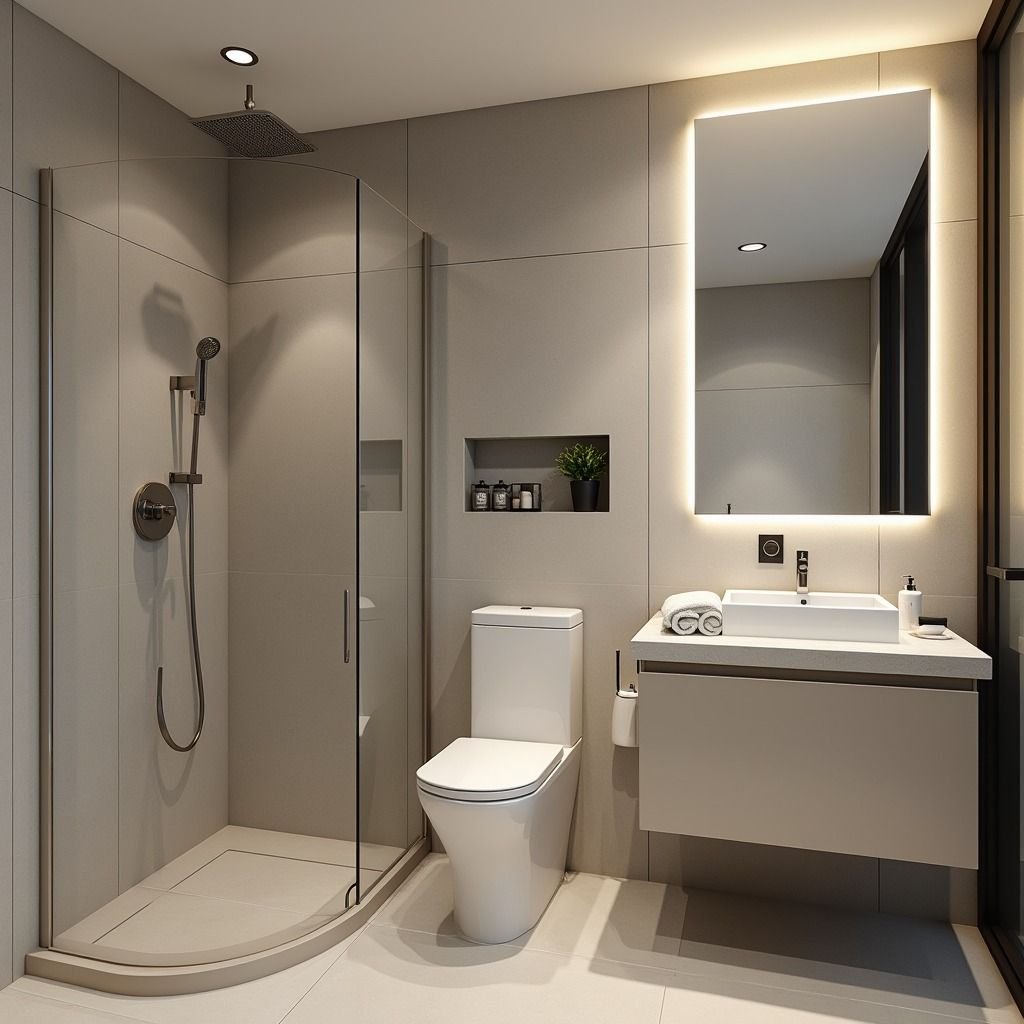
10. Spend on one daily luxury, then stop
A frugal renovation should still include one thing that feels indulgent.
Not because every remodel needs a splurge, but because the smartest budgets usually allow one carefully chosen comfort upgrade that gets used constantly.
The key is choosing just one.
That might be:
- a better showerhead
- a deeper kitchen sink
- heated bathroom flooring in a small footprint
- soft-close drawers
- a quiet exhaust fan
- a pull-out trash system
- a touchless kitchen faucet
One well-chosen convenience can make the room feel significantly more enjoyable without turning the project into a spending spiral.
The mistake is trying to make every decision the “special” one.
Pick the upgrade you will appreciate most often, make room for it, and let everything else stay practical.
That is how frugal renovation stays satisfying instead of feeling like endless compromise.
Frugal takeaway: Choose one luxury that earns its keep every day.
How frugal renovators think differently
The biggest difference between an expensive renovation and a smart one is not taste.
It is discipline.
Frugal renovators tend to make decisions in a different order. They do not begin with finishes. They begin with friction. What is annoying? What is inefficient? What breaks flow? What causes clutter? What is difficult to clean? What makes the room harder to use than it should be?
That mindset changes everything.
It leads to better lighting before prettier pendants. Better storage before more cabinetry. Better ventilation before decorative tile. Better function before trend-driven spending.
It also tends to produce rooms that age better.
A budget remodel built around function usually holds up longer than a trend-heavy remodel built around novelty. It is easier to maintain, easier to live with, and less likely to feel dated in five years.
That is the hidden advantage of renovating on a budget: constraints often force better decisions.
When money is limited, every purchase has to justify itself. That tends to eliminate the decorative filler and expose what actually matters.
And what actually matters in kitchens and bathrooms is not spectacle.
It is ease.
It is durability.
It is maintenance.
It is comfort.
It is using the room every day and feeling like it works.
That is what smart upgrades buy you.
Not bragging rights. Not showroom drama. Just a home that functions better, looks cleaner, and costs less to live with.
For most homeowners, that is the better deal.
FAQs
What is the cheapest way to update a kitchen without a full remodel?
The most affordable kitchen refresh usually starts with paint, hardware, lighting, and a faucet upgrade. Repainting cabinets, replacing old pulls, improving task lighting, and installing a better faucet can dramatically change how the room looks and functions without requiring demolition.
Is it cheaper to repaint bathroom cabinets or replace the vanity?
In most cases, repainting is significantly cheaper if the vanity is structurally sound. A painted vanity with new hardware and a modern faucet can look substantially newer for a fraction of the replacement cost. Replacement makes more sense when there is water damage, poor storage, or structural failure.
Which kitchen upgrade adds the most value for the least money?
Cabinet refinishing is usually one of the best value upgrades because cabinets dominate the visual space of a kitchen. Pairing refreshed cabinets with updated hardware and improved lighting often creates the strongest return relative to cost.
Are peel-and-stick backsplash tiles worth it?
They can be, especially for budget refreshes, rentals, or temporary upgrades. They work best in low-moisture, lower-heat applications and are most successful when used strategically. For long-term durability behind heavy-use cooking areas, traditional tile is usually the better investment.
What should I upgrade first in an old bathroom?
Start with the most noticeable and functional issues: lighting, ventilation, caulk, faucet, and storage. These upgrades improve both appearance and daily use quickly, and they often solve the biggest frustrations without requiring a full remodel.
How do I make a bathroom look expensive on a budget?
Focus on cohesion and detail. Use matching hardware finishes, improve lighting, refresh grout and caulk, repaint the vanity, reduce clutter, and upgrade the mirror or faucet. Bathrooms tend to look more expensive when they feel clean, intentional, and well-lit rather than overloaded with costly materials.