Meta Description: Budget DIY home upgrades to boost home value outside don’t have to break the bank. Learn about 11 cheap yet creative projects that dramatically change curb appeal for the better!
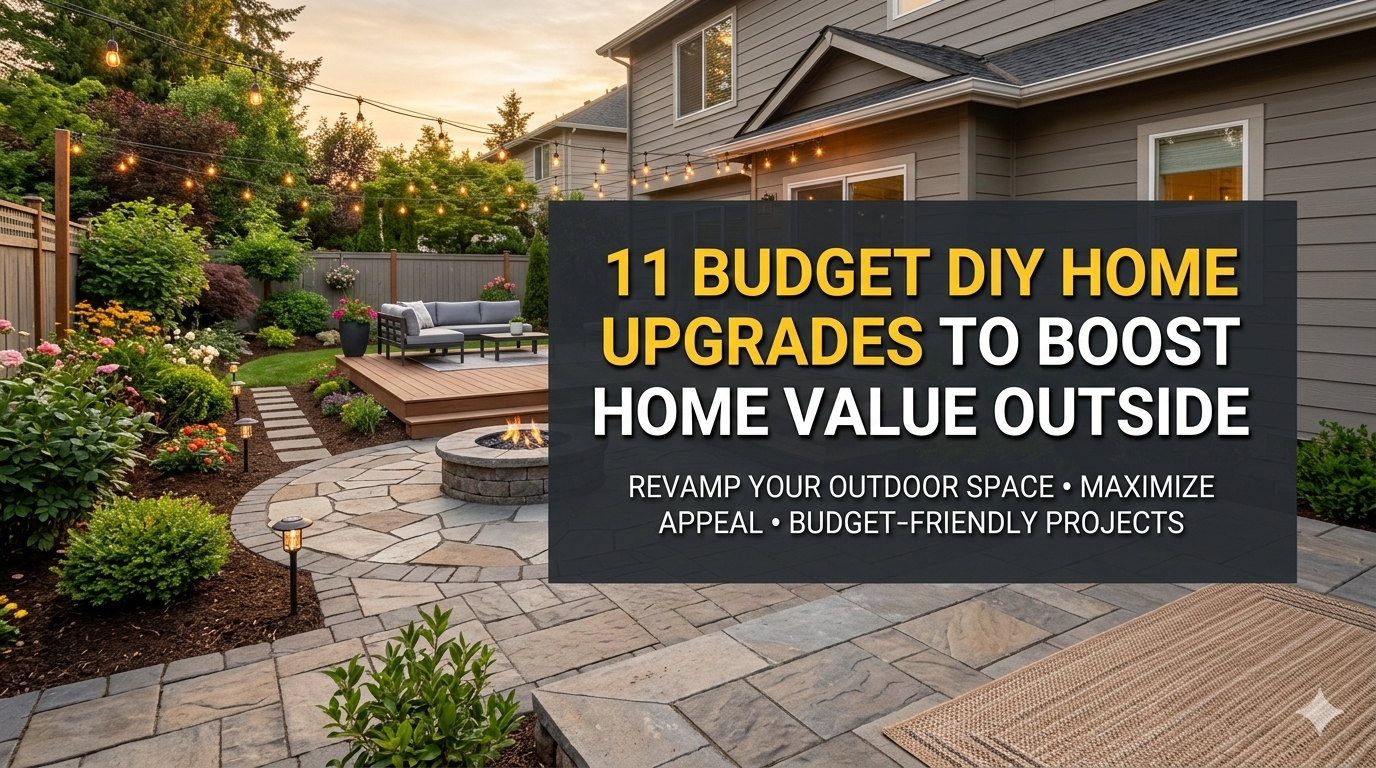
11 Budget DIY Home Upgrades to Boost Home Value Outside
First impressions are important. Very important.
The story your house tells from the outside — when a buyer drives past or even just the neighbor standing on the other side of the fence glances over there — is a big one. It’s either “It doesn’t need any work at all: just move right on in” — or else it is saying “it needs work.”
Whatever it says now, change is warranted.
Budget DIY home upgrades to boost home value outside are more feasible than most homeowners think. With a free weekend, a few basic tools, and one trip to your local hardware store, you can dramatically alter how your street-side appearance looks.
This article will provide 11 practical, inexpensive, and well-proven upgrades that contribute to real value while not emptying your pockets. Whether you are planning to sell or simply want to enjoy your home more, these projects give optimal bang for one’s buck.
Why Curb Appeal Directly Impacts Your Home’s Value
Before we delve into the projects, let’s discuss why this is important.
Real estate professionals consistently assert that curb appeal can increase a house’s value by 5% to 15%. That’s not peanuts. On a $300,000 home, that could be up to $45,000 in added value — from simply how the outside looks.
And here’s the kicker: most curb appeal improvements take only a fraction of what interior renovation does.
Buyers arrive at a decision on a house within the first seven seconds of seeing it. This is barely enough time to step out of an automobile. If the outside looks neglected, quite a few buyers won’t even bother looking inside.
This means that every dollar you spend on upgrading your home’s exterior is a smart dollar.
Is a DIY Project Actually “Worth It”?
Whether or not a project makes the most sense depends on you and your goals. Before you start pounding nails, it helps to know what really has an impact in terms of value.
A DIY upgrade that’s worth its money should:
- Cost less than $500 (it’s nice to spend less!)
- Be something you personally could do without requiring professional training
- Visually improve the home from the street
- Last at least a number of years with very minimal maintenance requirements
- Attract buyers from a wide spectrum of tastes rather than just matching your own personal preferences
With that in mind, here are the best 11 budget home upgrade projects to enhance home value and appearance from outside.
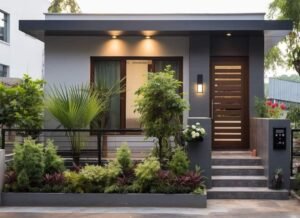
1. Fresh Paint Job On Your Front Door
The front entrance is the handshake of your home.
A faded, chipped, or tattered front door is speaking the wrong message. But a freshly painted door in a bold, on-trend color? Now that’s a statement.
Cost: $30–$80 Time: Half a day
Colors that work really well include navy blue, black, deep red, and forest green. These colors photograph beautifully and stand out in a neighborhood without looking tacky.
How to Do It Right
Sand the old surface down lightly. Wipe away any dust or muck. Apply a primer if you’re going from a light to a dark color (or vice versa). Then apply two layers of exterior-grade paint with a foam roller and small brush for the details.
Don’t forget the door frame. A fresh coat of paint on a dingy frame looks unfinished. Paint both pieces together and you’ll have a polished result.
2. New House Numbers
To start off with, the very simplicity of this one is its secret.
Old, rusting house numbers that are difficult to read make the house look dated and neglected. Put in a modern, clean set from any hardware store and all of a sudden there’s pep.
Cost: $15–$60 Time: 1–2 hours
Choose the Right Style
Pick numbers that are in keeping with the spirit of your home. Matte black or bronze looks good on a Craftsman-style house. A modern home looks sharp in brushed stainless steel or something with a simple font style.
Make sure the numbers are big enough that people from the street can see them clearly. Function counts as much as looks do here.
3. Pressure Wash Every Outdoor Surface
In just a few years, dirt, algae, mildew, and grime cover anything that stands still. Most homeowners don’t notice it any longer, since it’s such a gradual process. But to buyers, it stands out like a sore thumb.
Cost: $0–$60 (either borrow a pressure washer or rent one) Time: 3–5 hours
This is probably the highest return-on-investment upgrade on the whole list. You’re not adding anything new — you’re simply bringing back what’s already there.
What to Wash
You need to go over the driveway, sidewalk, front porch, siding, fences, decks, and any retaining walls. You might be amazed at how much brighter and newer everything looks afterwards.
While you work on this, get somebody to clean the gutters. If they are clogged, buyers taking a good look at your home will zero in on them instantly.
4. Start a Simple, Low-Maintenance Garden Bed
There’s nothing that softens a home’s look like plants. A bare foundation appears harsh. A clean, simple flower bed with low-maintenance plants brings life, color, and texture.
Cost: $50–$150 Time: 1 weekend
For this, you don’t have to be a graduate of a landscaping school. The main point is neat, intentional, and proportionate.
Plants That Do a Lot of Work for Very Little Money
| Plant | Why It Works | Approximate Cost |
|---|---|---|
| Ornamental grasses | Low maintenance, adds texture | $5–$10 each |
| Knockout roses | Colorful, disease-resistant | $10–$15 each |
| Hostas | Ideal for shaded areas | $5–$8 each |
| Lavender | Fragrant, drought-tolerant | $6–$10 each |
| Boxwood shrubs | Clean, tidy appearance | $12–$20 each |
It’s best to limit yourself to a maximum of 2–3 different plant varieties within each bed. Too many different plants can look cluttered. Just keep it as simple as possible.
Top the bed with dark mulch to make everything pop. You can almost instantly transform a garden bed with fresh mulch alone.
5. Outdoor Lighting
Good lighting serves two purposes: in the evening, it helps make your home look inviting, and it also tells potential buyers that safety and security around your house matter.
Cost: $40–$200 Time: 2–4 hours
The easiest way to start is to stake some solar-powered path lights along the walkway. Zero wiring, no electrician — just stick them in the ground and let the sun do the rest.
Where to Direct Your Light
- Along the front walkway
- On both sides of the front door (with wall-mounted lanterns)
- Uplighting a special tree or shrub
- Illuminating your garage if it faces the street
While you’re at it, replace those existing porch light fixtures. A modern lantern-style fixture costing $40–$80 takes the whole look of your entrance up to date.
6. Renovate or Replace the Mailbox
Street-level mailboxes are right there in the public eye — the very first thing anybody sees when they pull up. But most homeowners just ignore it.
Cost: $25–$100 Time: 1–2 hours
Replace it with a clean, matching-style box that suits the home’s character if you have a rusted, bent, or faded mailbox.
If you have a post-mounted mailbox, give the post a new coat of paint or replace it altogether. A wobbly or decayed post is an unsightly eyesore that’s an incredibly cheap fix.
7. Repair and Seal the Driveway
Cracks in a driveway scream “deferred maintenance” to potential buyers. It’s one of the most blatant signs that a homeowner hasn’t taken care of things.
Cost: $30–$100 Time: Half a day
Low-cost driveway crack filler and resealant can be bought from pretty much any hardware store for less than fifty dollars. The procedure is simple: clean away surface dirt and debris, fill in cracks, let it dry, then apply a coat of sealant.
When to Do This Project
Choose a weekend with no rain in the forecast for at least 24–48 hours. Temperature matters too — most sealants need above 50°F to cure properly.
A freshly sealed driveway looks dramatically cleaner and newer. This one improvement combined with power washing your whole house will make it all seem so much younger.
8. Paint or Stain the Front Porch Floor
If your front porch has a wood or concrete floor, it gets battered by the elements year after year. Faded, stained, or peeling porch floors look sad and neglected.
Cost: $40–$100 Time: 1 day
Porch and floor paint is specially formulated to put up with foot traffic as well as the weather. A solid color or even a simple two-tone checkerboard pattern can give your entrance a completely fresh look.
Pro Tips for Porch Floors
Clean the surface thoroughly before painting. Fill in all cracks or holes with wood filler or concrete patch. Use porch-specific paint — regular interior paint will peel off within months outdoors.
For a natural wood porch, a semi-transparent stain preserves the wood grain and freshens up the color. It generally looks more high-end than flat paint.
9. Build or Refresh Window Boxes
Window boxes brighten up the front of a house. They bring color, dimension, and charm — and believe it or not, this is an easy project for do-it-yourselfers.
Cost: $50–$150 for materials and plants Time: 1 weekend
At most garden centers you can buy pre-made window boxes, or if you’d rather spend less, you can build simple ones yourself from cedar boards. Cedar is an excellent choice since it naturally resists rot and insects.
What to Plant in Window Boxes
Think “thrillers, fillers, and spillers” to get the most visually appealing box:
- Thrillers: Tall, dramatic plants like spike grass or salvia
- Fillers: Dense, bushy plants like petunias or marigolds
- Spillers: Trailing plants like sweet potato vine or lobularia
Change them out seasonally. Summer annuals, fall mums, and winter evergreens keep the boxes looking intentional all year long.
10. Upgrade or Add Shutters
Shutters frame windows and break up the monotony of a flat façade. Many houses have no shutters at all, or old ones from decades past that are faded or don’t really fit the home in either style or color.
Cost: $80–$250 (for several windows) Time: Half a day to a full day
Composite or vinyl shutters are inexpensive, weather-resistant, and come in a range of decent colors. They install with just a few screws per panel.
Getting the Proportions Right
Shutters should be the same height as the window and, if functional, wide enough to cover it when closed. Shutters that are too small look awkward and out of place. When in doubt, measure twice.
Choose a color that either matches your trim or makes a pronounced contrast with your siding. Dark shutters on a light house work beautifully, and so do white shutters on a darker home.
11. Create a Defined Pathway to the Front Door
If you’ve got a straight walk from the driveway to the door with no defined walkway, you’re leaving visual interest on the table.
Cost: $60–$200 Time: 1–2 weekends
Creating a simple route made out of pavers, stepping stones, or poured concrete adds structure and flow. That path also draws the eye naturally toward your front door, making the home feel more intentional.
A Quick Look at Pathway Costs
| Material | Cost Per Sq. Ft. | Difficulty | Look |
|---|---|---|---|
| Stepping stones | $1–$3 | Easy | Casual/natural |
| Concrete pavers | $2–$5 | Moderate | Clean/modern |
| Gravel with edging | $1–$2 | Easy | Cottage/rustic |
| Flagstone | $3–$6 | Moderate | Upscale/classic |
Edge both sides of the pathway with mulch, low plants, or simple metal edging to keep things looking clean. A defined edge is what separates a DIY job from a professional-looking result.
How These Upgrades Pay Off: Cost vs. Impact
Here’s a quick summary of all 11 projects at a glance:
| Upgrade | Estimated Cost | Visual Impact | DIY Difficulty |
|---|---|---|---|
| Front door paint | $30–$80 | Very High | Easy |
| House numbers | $15–$60 | Medium | Very Easy |
| Power washing | $0–$60 | Very High | Easy |
| Garden bed | $50–$150 | High | Moderate |
| Outdoor lighting | $40–$200 | High | Easy–Moderate |
| Mailbox refresh | $25–$100 | Medium | Very Easy |
| Driveway repair | $30–$100 | High | Easy |
| Porch floor paint | $40–$100 | High | Easy |
| Window boxes | $50–$150 | High | Easy |
| Shutters | $80–$250 | High | Moderate |
| Defined pathway | $60–$200 | Very High | Moderate |
Total possible investment: As little as $420, as much as $1,450 — all for updates that can add 5%–15% to your home’s perceived value.
The Correct Sequence for These Projects
If you have several changes in mind, order counts.
Deal with the dirty work first — power washing and driveway repair. Then move on to structural work like pathways and shutters. Paint projects come after that. Finally, it’s the turn of plants, lighting, and decorative touches like window boxes and house numbers.
This order is designed to avoid finding clean or decorative work spoiled or dirtied by a heavier project later on.
For more budget-friendly ideas and step-by-step guidance on tackling home projects yourself, Frugal Home Renovator is a great resource packed with practical tips for cost-conscious homeowners.
Common Mistakes to Avoid
Even affordable projects can go wrong. Watch out for these traps:
Choosing colors based on personal taste alone. Bright orange shutters may express your personality, but they can put off buyers in a big way. Stick to colors with relatively broad appeal.
Skipping surface prep. Whether you’re painting a door or sealing a driveway, the prep work is 80% of the result. Rushing past it leads to peeling, cracking, and wasted money.
Overdoing it. More plants, more lights, more decorations don’t always equal better. Curb appeal is about clean, intentional, and proportionate. According to HGTV’s curb appeal guide, less is almost always more when it comes to exterior styling.
Forgetting about upkeep. A flowerbed looks lovely when it first blooms, but if neglected during summer it will appear worse than nothing at all. Only put in plants you’re willing to care for.
FAQs About Budget DIY Home Upgrades to Boost Home Value Outside
Q: How much can curb appeal increase my home’s value? Studies and real estate professionals consistently cite a range of 5% to 15% in added perceived value. The exact percentage depends on your market, home size, and the quality of what you do.
Q: What’s the biggest bang for my buck? Power washing. It costs almost nothing and delivers the most dramatic visual improvement. Painting the front door is a very close second.
Q: Do I have to get a permit to do these projects? Most of these projects — painting, planting, power washing, and decorative upgrades — do not require a permit. Structural changes like adding a poured concrete pathway may require a permit in some municipalities. Check with your local building department if you’re unsure.
Q: How long will these upgrades last? With proper prep work and good materials, most of these can be expected to look good for three to seven years. Exterior paint, sealed driveways, and well-maintained plantings tend to last longest.
Q: Can all 11 projects be done in one weekend? Not with full ease. In reality, power washing, house numbers, and the mailbox could all be turned around in one day. The remaining projects can be spread over the next two or three weekends so you’re not rushing and cutting corners.
Q: Will these improvements help me even if I’m not trying to sell my home? Absolutely, yes. A neat front yard raises your quality of life, improves property values throughout the whole neighborhood, and makes every guest’s first impression a great one. You don’t need a “for sale” sign to benefit from these projects.
Summing It All Up
Budget DIY home upgrades to boost home value outside are one of the smartest investments a homeowner can make. You don’t need a contractor, a big budget, or several months off work.
You need a plan and a little elbow grease. You must also be prepared to take things step by step, not doing too much at any one time.
First work through the tasks that pay off with spectacular results for minimal work — power washing, paint on the front door, and some fresh mulch around a garden bed. Then make time over a few weekends to build out from there.
By the time they’re all done, your house will not only look good. It will also be worth more. And that’s an investment you can see without ever getting out of the car.