10 proven outdoor and curb tips for a beautiful entry
There’s something quietly powerful about arriving at a home that feels welcoming before you even step inside. The entryway—whether it’s a modest front door opening onto a narrow path or a wide porch framed by greenery—acts as the handshake of a house. It tells a story about care, personality, and attention to detail. Over time, I’ve tested, adjusted, and sometimes completely rethought how outdoor spaces shape that first impression. What follows isn’t a theoretical list; it’s a lived-in collection of ideas that have proven their worth through trial, error, and small moments of satisfaction—like noticing someone pause just a second longer before knocking.
These ten tips are not about spending excessively or chasing trends. They are about using simple, thoughtful changes to create a space that feels intentional and alive. Along the way, you’ll find not just instructions, but reflections, small checklists, and sensory details to help you visualize the transformation.
tip one: start with a clean slate
Before adding anything new, the most impactful change often comes from removing what shouldn’t be there. It sounds obvious, but it’s surprisingly easy to overlook the basics.
I once spent an entire afternoon rearranging plants and experimenting with lighting, only to realize the walkway itself was dull and dusty. After a proper cleaning, everything else suddenly looked better—no extra cost involved.
Here’s a simple reset checklist:
- Sweep pathways and porch surfaces thoroughly
- Wash down walls, doors, and railings
- Remove cobwebs and debris from corners
- Clear out dead plants or cluttered décor
A pressure washer, if available, can dramatically revive stone, concrete, or brick. But even a bucket of soapy water and a stiff brush can make a visible difference.
Think of this step as preparing a canvas. Without it, even the most beautiful additions will struggle to stand out.
tip two: frame the door with intention
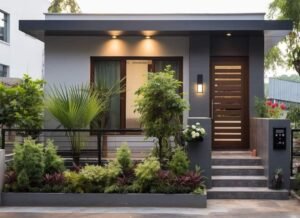
The front door is the natural focal point, but it often ends up feeling isolated instead of emphasized. Framing it properly gives the entire entry a sense of structure.
Symmetry is one approach—matching planters, lanterns, or décor pieces on both sides of the door. It creates balance and calm. But asymmetry can work just as well if done thoughtfully, like pairing a tall plant on one side with a cluster of smaller elements on the other.
Try this mini layout exercise:
- Stand across the street or at the edge of your property
- Look at your entry from a distance
- Ask yourself: where does my eye go first?
If the answer isn’t “the door,” then framing needs adjustment.
Even something as simple as two medium-sized pots with seasonal plants can anchor the entrance visually.
tip three: layer your lighting
Lighting doesn’t just help people see—it shapes how a space feels. A single harsh light can flatten everything, while layered lighting adds depth and warmth.
Think in three levels:
- overhead lighting (porch light or ceiling fixture)
- mid-level lighting (wall sconces or lanterns)
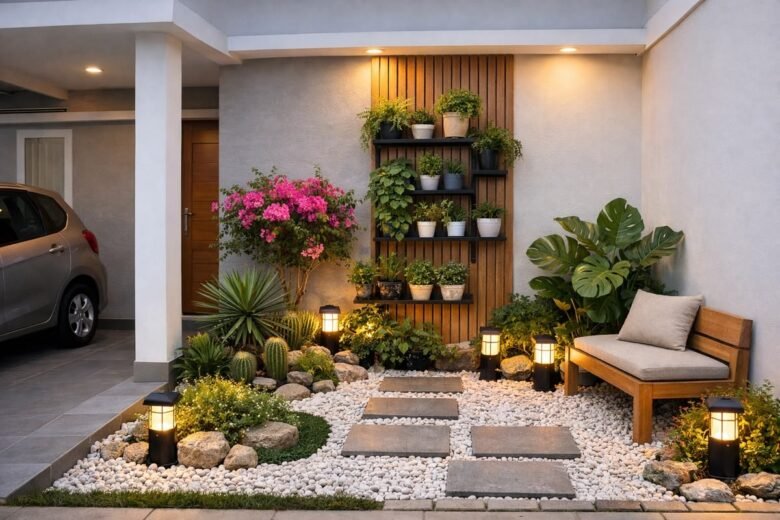
- low lighting (pathway lights or ground-level accents)
Warm-toned bulbs usually create a more inviting atmosphere than cool white ones. If you’ve ever walked up to a softly lit home at dusk, you’ll understand the subtle comfort it brings.
A small experiment:
Turn off your main porch light one evening and use only lower-level lights. Notice how the mood changes. Then reintroduce the main light and adjust until it feels balanced.
tip four: invest in a statement door color
Paint is one of the simplest ways to transform an entry, yet it’s often underutilized. A bold or thoughtfully chosen door color can redefine the entire look of your home.
But “bold” doesn’t necessarily mean bright red or electric blue. It means intentional. Deep green, charcoal, navy, or even a muted terracotta can create a striking effect.
When choosing a color, consider:
- the tone of your exterior walls
- surrounding plants and materials
- the overall mood you want (calm, vibrant, classic)
Before committing, test a small section. Colors can look very different in natural light compared to indoor samples.
tip five: create a natural pathway flow
A beautiful entry isn’t just about the door—it’s about the journey toward it. The path should feel intuitive and inviting, not like an afterthought.
If your walkway is plain or worn, small upgrades can make a big difference:
- edge it with bricks or stones
- add stepping stones through grass or gravel
- introduce subtle curves instead of straight lines
Movement matters. A slightly curved path can feel more organic and welcoming than a rigid, straight one.
And don’t forget the edges—plants, lights, or even decorative stones can guide the eye and the steps naturally.
tip six: use plants with purpose
Plants are often added randomly, but when chosen and placed with intention, they become one of the most powerful design tools.
Instead of thinking “what plants do I like,” ask:
- what height do I need here?
- do I want softness or structure?
- how will this look across seasons?
Combine different types:
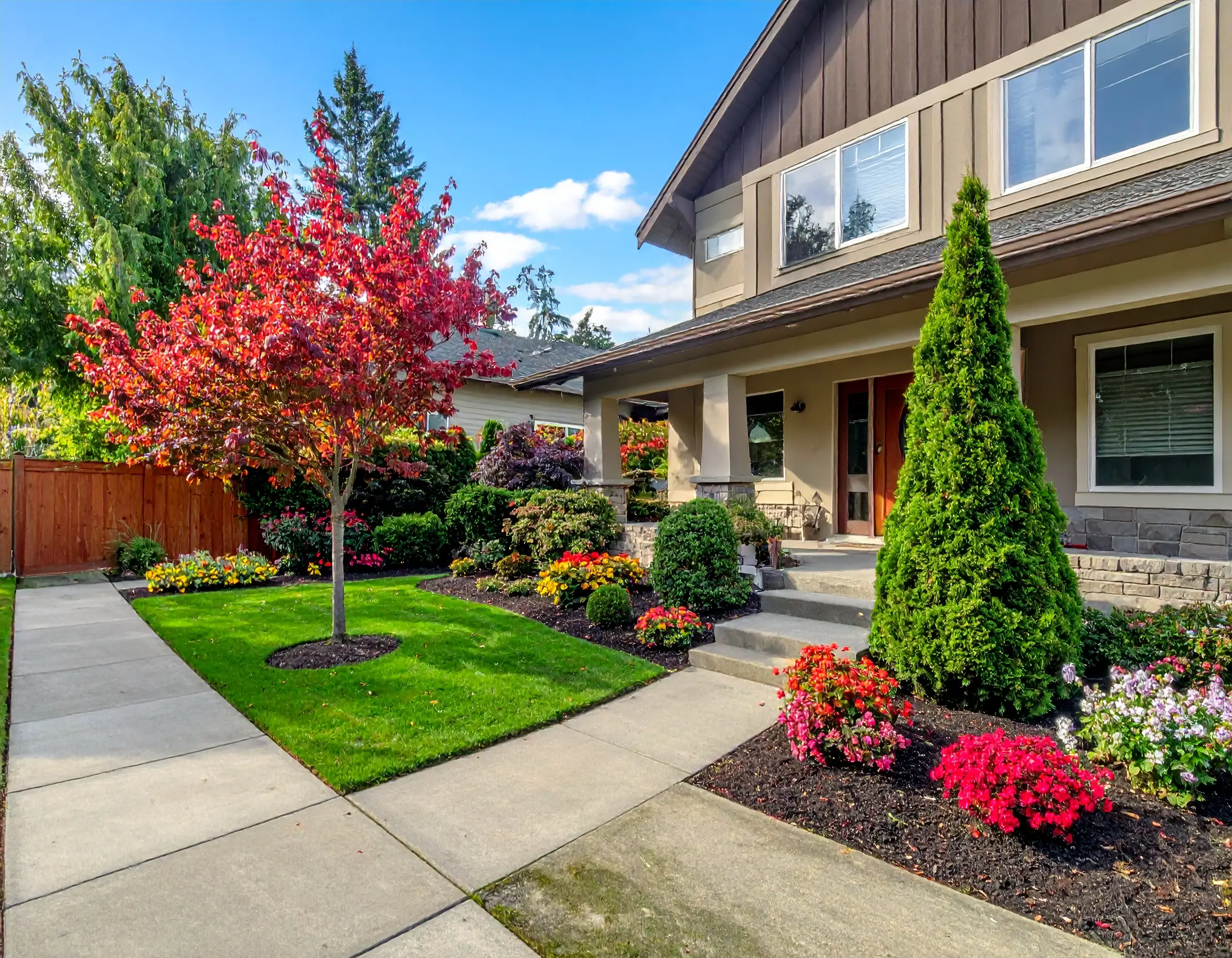
- tall plants for vertical emphasis
- medium shrubs for fullness
- low ground cover for continuity
A personal lesson: I once filled my entry with too many small pots. Individually, they looked fine, but together they felt cluttered. Replacing them with fewer, larger plants instantly made the space feel calmer and more refined.
tip seven: define the space with texture
Texture is often overlooked because it’s less obvious than color or shape, but it plays a huge role in how a space feels.
Mixing materials can add richness:
- wood with stone
- metal with greenery
- smooth surfaces with rough ones
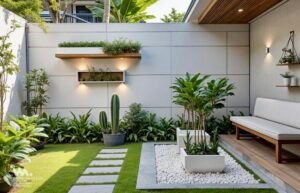
Even small touches matter—a woven doormat, a wooden bench, or a stone planter can introduce subtle contrast.
Try running your hand over different surfaces in your entry. The variation should feel interesting, not chaotic.
tip eight: add a functional focal point
A beautiful entry should also be practical. Adding a functional element can enhance both usability and visual appeal.
Some ideas:
- a small bench for putting on shoes
- a side table for packages or décor
- a covered area for shelter from rain
When something is both useful and attractive, it naturally becomes a focal point.
One of my favorite additions was a simple bench. It wasn’t expensive, but it changed how the space was used—and how it felt. Suddenly, the entry wasn’t just a passage; it was a place.
tip nine: personalize without cluttering
This is where many entries go wrong. In an effort to make the space unique, it becomes overcrowded.
Personal touches are important, but they need room to breathe.
Instead of adding many small items, choose a few meaningful ones:
- a distinctive house number design
- a unique door knocker
- a carefully chosen piece of décor
Ask yourself:
If I removed half of these items, would the space feel better?
Often, the answer is yes.
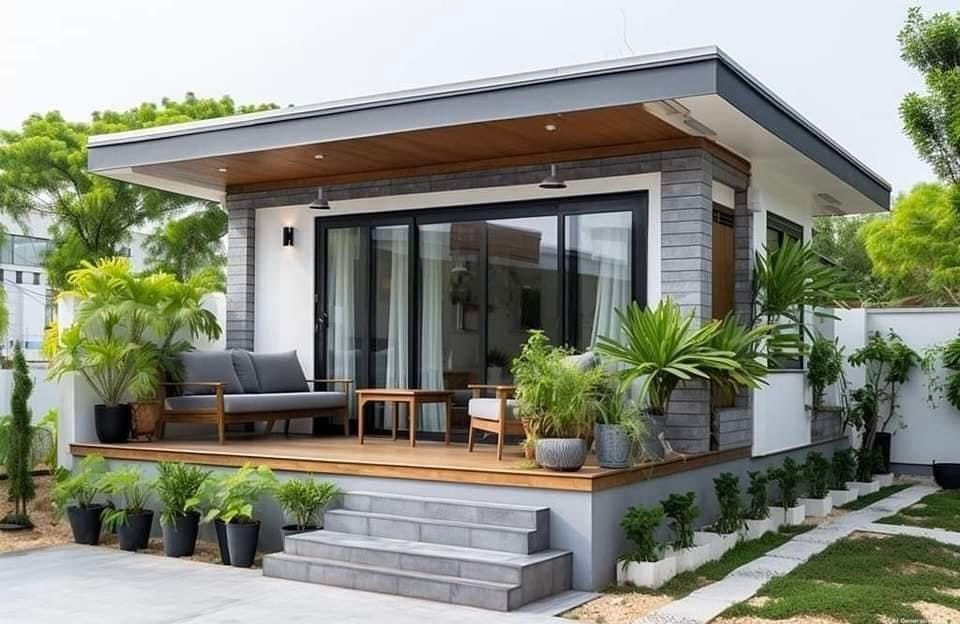
tip ten: maintain consistently, not occasionally
Even the most beautiful entry can lose its charm without regular upkeep. The goal isn’t perfection—it’s consistency.
Set a simple routine:
- weekly: sweep and tidy
- monthly: check plants and lighting
- seasonally: refresh décor or make small updates
Maintenance doesn’t have to be time-consuming. A few minutes here and there can preserve the effort you’ve already invested.
Think of it as a rhythm rather than a chore.
a closing reflection
Creating a beautiful entry isn’t about following rules—it’s about paying attention. It’s noticing how light falls in the evening, how a plant grows over time, how a color feels on different days.
The best entries don’t look staged. They feel lived in, cared for, and quietly intentional.
If you take anything from these tips, let it be this: start small, observe often, and adjust as you go. The transformation doesn’t happen all at once—it unfolds, step by step, until one day you realize your home greets you just as warmly as it greets everyone else.
frequently asked questions
- how much should i budget for improving my entryway?
You don’t need a large budget to see noticeable results. Many impactful changes—like cleaning, rearranging, or repainting—are low-cost. Start with what you already have, then invest gradually in key items like lighting or plants. - what are the best low-maintenance plants for entryways?
Look for plants suited to your climate that require minimal watering and pruning. Evergreen shrubs, succulents, or hardy ornamental grasses are often good choices, depending on your region. - how do i choose the right lighting for my entry?
Focus on warmth and layering. Avoid overly bright or harsh lights. Instead, combine a main light source with softer accent lighting to create depth and a welcoming atmosphere. - can i improve my entryway if i have a very small space?
Absolutely. Small spaces can benefit even more from thoughtful design. Use vertical elements, keep décor minimal, and focus on one or two standout features rather than many small ones. - how often should i update my entry décor?
Seasonal updates are a good rhythm—four times a year. However, small adjustments can be made anytime you feel the space needs a refresh. - what is the most common mistake people make with curb appeal?
Overcomplicating the design. Too many elements can make the space feel cluttered and unfocused. Simplicity, when done well, often creates the strongest impression.