11 easy outdoor and curb projects I tried myself
I didn’t set out to transform my outdoor space all at once. In fact, most of these projects began as small weekend experiments—things I thought I might abandon halfway through. But something interesting happened along the way. Each small improvement fed into the next. A cleaned walkway made me notice the dull mailbox. A painted mailbox made the porch look tired. And before I knew it, I had worked through eleven different projects that quietly changed how my home felt from the outside.
What follows isn’t a technical guide or a perfectly polished checklist. It’s a lived-in account of what I tried, what worked, what didn’t, and what I’d do differently if I had to start again.
- repainting the front door
I underestimated how much a front door matters. Mine had faded into a kind of undefined brown that looked neither intentional nor appealing. One Saturday morning, I picked up a deep blue paint—something bold enough to stand out but not loud enough to clash with the house.
The process itself was simple: clean, sand lightly, tape edges, and paint. But the impact was immediate. It felt like the house suddenly had a personality.
What I didn’t expect:
- The color would influence everything else around it
- Neighbors would actually comment on it
- I’d start noticing other people’s doors more
Small tip: test your paint in different lighting. Morning and evening light can make the same shade look completely different.
- adding solar pathway lights
I used to think outdoor lighting required wiring, planning, and a fair amount of patience. Turns out, solar lights are the shortcut I didn’t know I needed.
I lined the walkway with simple stake lights. No cables, no electrician—just push them into the ground where sunlight hits during the day.
The first night they turned on automatically, I stood outside longer than necessary just to watch.
Unexpected outcome:
- The house looked more “finished” after sunset
- It subtly improved safety without being obvious
- It made evening arrivals feel calmer
If I could redo it, I’d space them more evenly. I eyeballed it the first time, and you can tell.
- building a small flower bed border
This one started because my lawn edges looked messy. Grass crept into the flower bed, and soil spilled out after rain.
I bought inexpensive edging stones and created a defined border. It took an afternoon and a bit of trial and error to keep the line straight.
Here’s what surprised me: structure changes perception. The same plants looked more intentional simply because they were framed.
Lessons learned:
- Lay out the design before fixing anything in place
- A rubber mallet is more useful than you think
- Straight lines are harder than they look
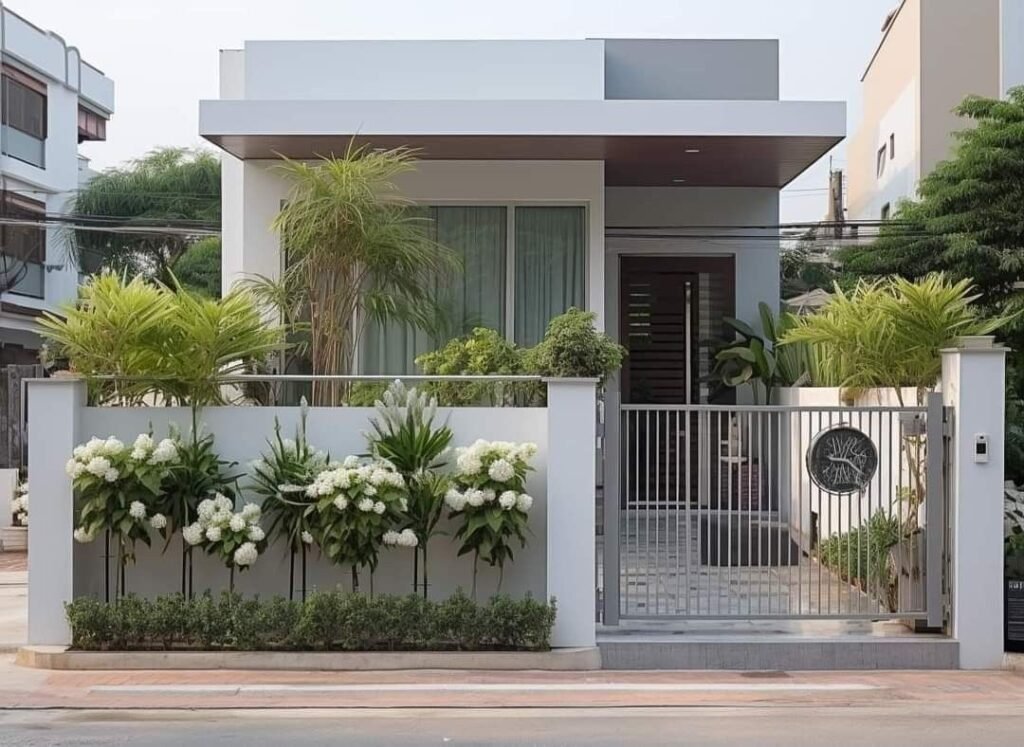
- upgrading the house numbers
This was one of the quickest projects, yet one of the most satisfying.
The old house numbers were small, slightly rusted, and barely visible from the street. I replaced them with larger, modern ones in a matte finish.
Installation took less than an hour.
But here’s the thing: clarity matters. Delivery drivers stopped calling for directions. Visitors found the house without confusion.
Sometimes, improvement is just about being easier to understand.
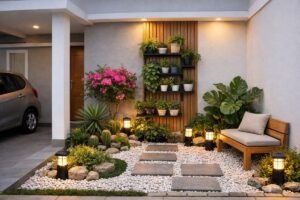
- creating a gravel sitting corner
I didn’t have space for a full patio, but I wanted somewhere to sit outside that didn’t involve dragging chairs onto the lawn.
So I cleared a small square, laid down landscape fabric, and poured gravel over it. Then I added two chairs and a small table.
It became my go-to morning spot.
What I noticed:
- Defined spaces invite use
- Even a small corner can feel intentional
- Maintenance is lower than grass
If I could improve it, I’d add a few larger stones to anchor the furniture.
- painting the mailbox
My mailbox had seen better days. Faded paint, minor rust, and a general look of neglect.
I removed it, sanded it down, and gave it two coats of black paint. I also added a subtle house number decal on the side.
It took less time than expected, but it made a disproportionate difference.
Why it worked:
- It matched the newly painted door
- It was at eye level for passersby
- It showed attention to detail
Small things signal care.
- planting low-maintenance greenery
I used to avoid planting because I assumed it required constant upkeep. Then I shifted strategy: choose plants that survive without much help.
I focused on hardy shrubs and seasonal flowers that thrive in my climate. Instead of variety, I went for repetition—clusters of the same plant.
The result felt more cohesive and less chaotic.
Key realization:
It’s better to maintain a few things well than many things poorly.
- cleaning and sealing the walkway
I didn’t realize how dirty my walkway had become until I cleaned a small section and compared it to the rest.
Using a pressure washer (borrowed, not bought), I cleaned the entire path. Then I applied a sealant to protect it.
The transformation was dramatic.
Before: dull, stained, uneven
After: brighter, smoother, almost new
What I’d recommend:
- Test pressure settings first to avoid damage
- Work in sections to stay consistent
- Don’t skip sealing—it extends the effect
- adding a simple bench
I found a basic wooden bench and placed it near the entrance. At first, it felt unnecessary.
Then I started using it:
- To set down bags
- To sit briefly while on calls
- As a visual anchor for the entry area
It changed how the space functioned, not just how it looked.
Design insight:
Function often creates beauty, not the other way around.
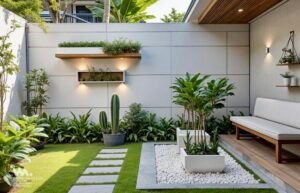
- installing a trellis with climbing plants
This was one of the more experimental projects. I installed a simple trellis against a blank wall and planted climbing vines.
At first, it looked underwhelming. Just a structure with small plants at the base.
But over time, it evolved. The plants grew, filled the space, and added vertical interest.
Patience paid off here.
What I learned:
- Not all projects have immediate results
- Growth-based changes are gradual but rewarding
- Vertical elements break monotony
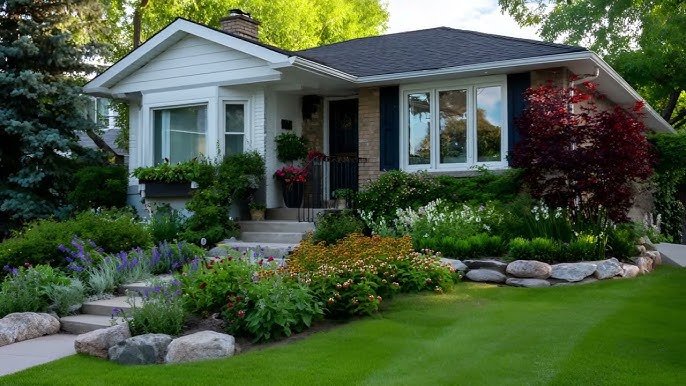
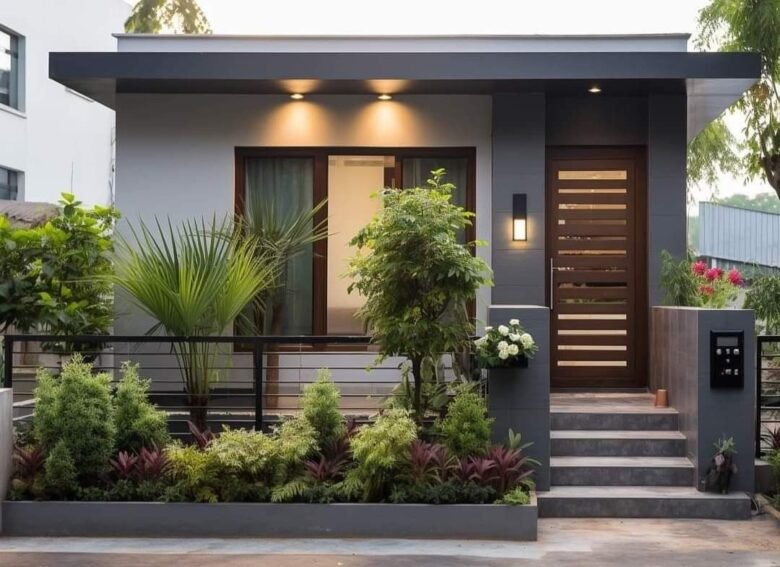
- refreshing the porch floor
The porch floor had minor cracks and discoloration. Instead of replacing it, I opted for a concrete paint designed for outdoor use.
Preparation took longer than painting—cleaning, patching, and drying.
But once finished, the porch looked cohesive again.
Final touch: a simple outdoor rug that tied everything together.
This project made the entrance feel complete.
what tied everything together
None of these projects were groundbreaking on their own. But together, they created a sense of continuity.
A few patterns emerged:
Consistency beats complexity
Repeating colors and materials made everything feel connected.
Maintenance matters as much as design
Cleaning and repairing had as much impact as adding new elements.
Small projects reduce overwhelm
Each step felt manageable, which kept momentum going.
Time changes perception
Some improvements were instant. Others revealed themselves slowly.
mistakes I made (and what I’d do differently)
I didn’t get everything right. A few things I’d change:
- I rushed spacing for lights and plants instead of measuring
- I chose one paint color without testing it properly
- I underestimated preparation time for surfaces
- I occasionally focused on aesthetics before function
None of these were disasters, but they were reminders that planning helps.
how to start if you’re unsure
If you’re looking at your outdoor space and don’t know where to begin, start small.
Pick one visible element:
- The front door
- The walkway
- The mailbox
Complete it fully before moving on.
Momentum builds from completion, not intention.
faqs
- how much did these projects cost overall?
Most of the projects were budget-friendly. I spread them out over time, which made the cost manageable. Individually, many of them required only basic materials and tools. - do I need professional tools for these projects?
Not really. Most tasks used simple tools like brushes, a shovel, or a drill. The only specialized tool I used was a pressure washer, and I borrowed that. - how long does it take to see results?
Some changes, like painting or cleaning, show results immediately. Others, like planting or climbing vines, take weeks or months to fully develop. - what if I don’t have much outdoor space?
Even small spaces can benefit from these ideas. Focus on scale—use compact versions of the same concepts, like a single plant cluster or a narrow seating area. - how do I choose the right colors?
Start with one anchor color (like your door) and build around it. Keep the palette limited to avoid a cluttered look. - are these projects suitable for beginners?
Yes. None of these require advanced skills. Patience and basic preparation matter more than experience.
In the end, what surprised me most wasn’t how much the house changed, but how much my relationship with it did. I began noticing details, spending more time outside, and taking quiet pride in small improvements.
It didn’t happen overnight. It happened one project at a time.