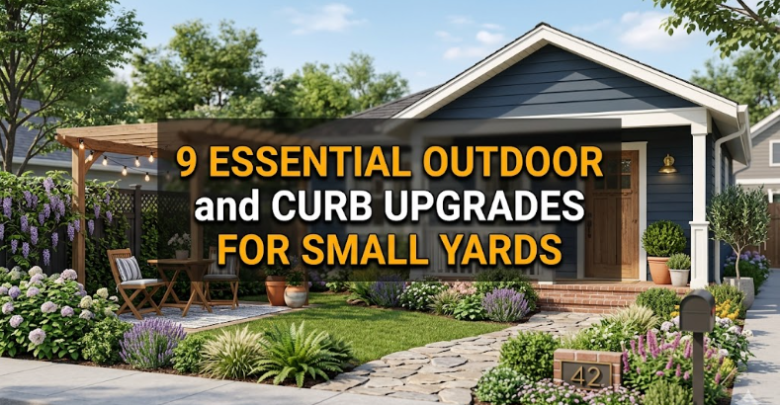
9 Essential Outdoor and Curb Upgrades for Small Yards
A small yard doesn’t mean small potential. In fact, compact outdoor spaces often invite more thoughtful design, more intentional choices, and ultimately more personality than sprawling lawns that are harder to manage. If you’ve ever stood in your tiny front yard or narrow backyard and wondered what you could realistically do with it, the answer is: quite a lot.
This guide isn’t just a list of upgrades. It’s a working playbook—part inspiration, part practical advice, and part lived-in storytelling—to help you transform a modest outdoor area into something that feels complete, welcoming, and even a little luxurious.
Below, you’ll find nine essential upgrades that don’t require acres of land or an unlimited budget. Each one is designed to build on the others, so you can implement them gradually or all at once, depending on your pace and resources.
- define the edges before filling the center
One of the biggest mistakes in small yards is focusing on what goes in the middle before establishing boundaries. Without clear edges, a small space can feel messy or unfinished, even if you’ve added nice features.
Start by outlining your yard’s structure:
- Low hedges or border plants
- Brick or stone edging
- Wooden or metal fencing
- Gravel strips along borders
Think of it like framing a painting. Once the edges are defined, everything inside feels more intentional.
Mini layout sketch idea:
[ Fence ]
| |
| |
| |
|_______|
Now imagine adding:
- A narrow planting strip along one side
- A seating area in a corner
- A pathway cutting through
Suddenly, the same space feels organized.
- build vertical interest instead of spreading out
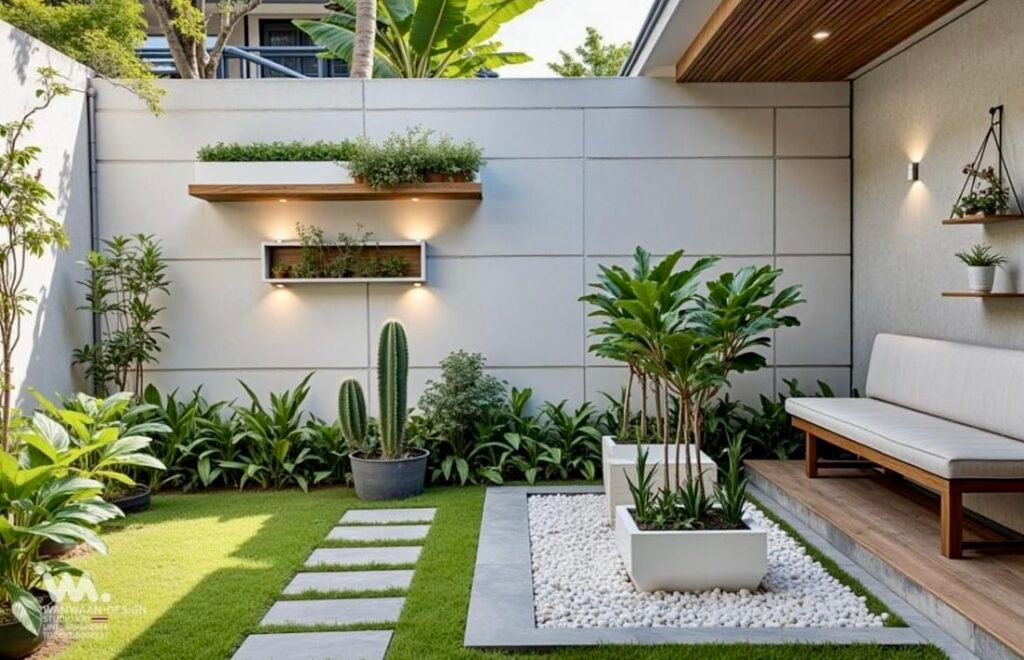
When space is tight, the only logical direction is up. Vertical design is the secret weapon of small yard upgrades.
Here are a few ways to do it:
- Wall-mounted planters
- Trellises with climbing plants
- Hanging baskets
- Vertical herb gardens
- Slim shelving units outdoors
Climbing plants like jasmine, ivy, or bougainvillea can transform a plain wall into a living feature.
Quick comparison:
Without vertical elements:
Flat, one-dimensional, visually limited.
With vertical layers:
Dynamic, textured, visually deeper.
If you’re working with a plain wall, treat it as an opportunity, not a limitation.
- create a focal point that anchors the space
Every good outdoor space has something that catches the eye immediately. In a small yard, this is even more important because it prevents the space from feeling scattered.
Your focal point could be:
- A small water feature
- A bold planter arrangement
- A statement chair or bench
- A fire bowl
- A painted mural wall
The key is restraint. Choose one primary focal point, not five.
Think of it this way:
If everything stands out, nothing stands out.
A simple example:
A single large ceramic pot with a small tree or ornamental plant can be more impactful than ten small pots scattered everywhere.
- rethink pathways as design elements
Pathways in small yards aren’t just functional—they can be aesthetic highlights.
Instead of a plain straight path, consider:
- Stepping stones set in grass or gravel
- Curved paths that create a sense of journey
- Mixed materials (wood + stone, gravel + brick)
- Narrow paths with border lighting
Example concept:
Entrance
↓
[ Stone ]
↓
[ Grass gap ]
↓
[ Stone ]
↓
Seating area
This broken pathway style adds rhythm and visual interest.
Even in a tiny yard, a thoughtfully designed path can make the space feel larger because it guides movement rather than exposing everything at once.
- invest in multi-functional furniture
In small yards, every piece should earn its place.
Instead of separate items for every purpose, look for:
- Benches with hidden storage
- Foldable chairs and tables
- Stackable stools
- Coffee tables that double as storage boxes
- Built-in seating along walls
Example:
A wooden bench along the wall:
- Seating during the day
- Storage for cushions/tools inside
- Visual anchor for the yard
This reduces clutter and keeps the space adaptable.
Tip: Avoid bulky furniture. Choose pieces with slim profiles and visible legs to maintain a sense of openness.
- layer lighting for depth and mood
Lighting is one of the most underrated upgrades for small outdoor spaces. It doesn’t just make the yard usable at night—it completely changes how it feels.
Use three layers:
- Ambient lighting (overall glow)
- String lights
- Lanterns
- Task lighting (functional)
- Path lights
- Step lights
- Accent lighting (highlight features)
- Spotlights on plants
- Wall washes
Simple lighting plan:
Fence line: soft string lights
Pathway: small ground lights
Focal plant: upward spotlight
Result:
A cozy, layered environment that feels much larger after sunset.
- introduce texture through materials
In a small yard, variety matters more than quantity. Instead of adding more objects, introduce more textures.
Combine materials like:
- Wood (warm, natural)
- Stone (solid, grounding)
- Metal (sleek, modern)
- Fabric (soft, inviting)
- Gravel (loose, organic)
Example combination:
Wooden bench + stone pavers + metal planters + outdoor cushions
This creates contrast without overcrowding.
Texture trick:
Even a monochrome color scheme can feel rich if textures vary.
- use greenery strategically, not excessively
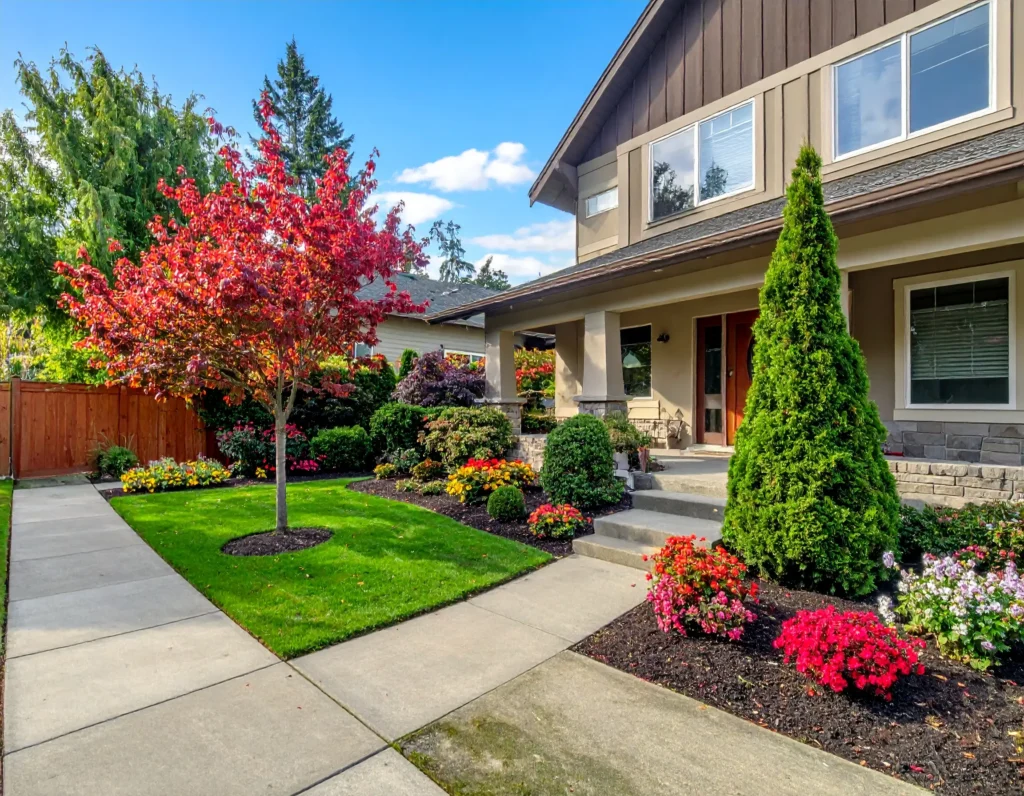
It’s tempting to fill a small yard with plants, but too much greenery can feel chaotic.
Instead:
- Choose fewer, more impactful plants
- Mix heights (ground cover, medium shrubs, taller plants)
- Repeat plant types for cohesion
Planting formula:
1 tall feature plant
2–3 medium plants
Ground layer or filler plants
Also consider:
- Potted plants for flexibility
- Raised planters to define zones
- Symmetry for a clean look
Example:
[ Tall plant ]
[ Medium ] [ Medium ]
[ Low filler across base ]
This layered approach creates depth without clutter.
- define zones, even in a tiny space
Even the smallest yard can benefit from zoning. It doesn’t require walls—just subtle visual cues.
Possible zones:
- Seating area
- Planting area
- Entry path
- Decorative corner
How to define zones:
- Different flooring materials
- Rugs outdoors
- Planters as dividers
- Slight elevation changes
- Lighting differences
Example layout:
[ Entry path ]
↓
[ Seating corner ] | [ Plant strip ]
This makes the yard feel purposeful rather than random.
bonus: bring personality into the space
Upgrades are important, but personality is what makes a yard memorable.
Add elements that reflect you:
- Handmade decor
- Painted pots
- A small bookshelf for outdoor reading
- Wind chimes
- Personal color choices
Even one or two personal touches can turn a “nice yard” into your yard.
practical upgrade roadmap
If you’re wondering where to start, here’s a simple order:
Step 1: Clean and declutter
Step 2: Define edges
Step 3: Add pathway
Step 4: Install focal point
Step 5: Introduce vertical elements
Step 6: Add furniture
Step 7: Layer lighting
Step 8: Refine with plants and textures
This phased approach keeps things manageable.
common mistakes to avoid
- Overcrowding with too many items
- Ignoring vertical space
- Using oversized furniture
- Lack of lighting
- No clear focal point
- Mixing too many styles
Sometimes what you remove matters more than what you add.
FAQs
- How can I make my small yard look bigger without expanding it?
Use vertical elements, define clear pathways, and avoid clutter. Light colors, mirrors, and layered lighting can also create an illusion of space. - What is the most budget-friendly upgrade for curb appeal?
Lighting and paint. A fresh coat on fences or planters combined with simple string lights can dramatically improve appearance at low cost. - How many plants should I include in a small yard?
Focus on quality over quantity. A few well-chosen plants with varying heights will look better than overcrowding with many small ones. - Can I include a seating area in a very small yard?
Yes. Use compact, multi-functional furniture like foldable chairs or built-in benches to maximize space without sacrificing comfort. - What type of flooring works best for small outdoor spaces?
Gravel, stepping stones, or compact pavers work well. They’re cost-effective, visually appealing, and flexible for different layouts. - How do I maintain a small yard easily?
Choose low-maintenance plants, use mulch or gravel to reduce weeds, and keep furniture minimal. A simple layout is easier to maintain long-term.
Closing thoughts
A small yard isn’t a limitation—it’s a design challenge with a surprisingly rewarding outcome. When every inch counts, every decision becomes more meaningful. The result is often a space that feels curated, efficient, and deeply personal.
You don’t need a massive renovation or a huge budget. Start with one upgrade. Then another. Over time, your small yard won’t just look better—it will feel like an extension of your home, thoughtfully shaped to fit your life.