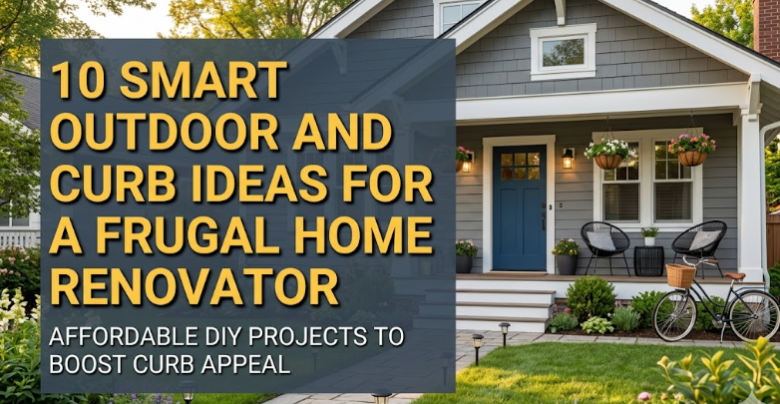
10 Smart Outdoor and Curb Ideas for a Frugal Home Renovator
There’s a certain kind of satisfaction that comes from standing across the street, looking at your home, and thinking, “That looks better than it did last month.” Not because you spent a fortune. Not because a contractor transformed everything overnight. But because, piece by piece, decision by decision, you reshaped what was already there into something that feels intentional.
Curb appeal is often misunderstood. It isn’t about perfection or copying something out of a design magazine. It’s about clarity—removing visual noise, highlighting what works, and creating a sense of care. And when you’re working with a tight budget, that clarity becomes your greatest asset.
This guide walks through ten practical, frugal outdoor and curb improvement ideas. These aren’t theoretical tips. They’re grounded in real trade-offs, small wins, and a mindset that values progress over perfection.
- redefine your entry point instead of rebuilding it
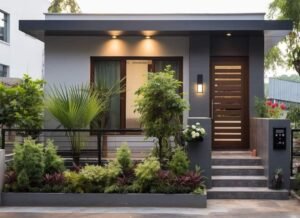
Most people assume that upgrading an entrance requires replacing doors, installing new stonework, or adding elaborate structures. In reality, the front entry often suffers from something simpler: lack of definition.
Walk up to your front door and pay attention to what guides your eye. Is there a clear path? Is the door framed in a way that draws attention? Or does everything blend together?
You can redefine the entry point using inexpensive changes:
- Paint only the door in a contrasting color
- Add a simple overhead light fixture with warm tones
- Place two identical planters on either side for symmetry
- Use a small outdoor rug to anchor the space
Try this quick test:
Before:
- Door blends with wall
- No visual “stop” point
After:
- Door color contrasts wall
- Lighting highlights entry
- Planters create structure
The difference isn’t in cost—it’s in focus.
- use gravel and edging to fake expensive landscaping
Lawn care can be expensive, especially if you’re trying to maintain lush greenery in a challenging climate. Instead of fighting nature, you can shift toward a more controlled, low-maintenance look.
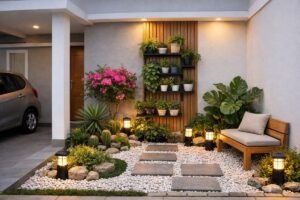
Gravel is one of the most underrated materials for curb improvement. When paired with simple edging, it creates clean lines that feel deliberate.
A basic setup:
- Remove patchy grass in a small section
- Lay down landscape fabric
- Add a layer of gravel
- Use bricks, wood, or metal strips as edging
This works especially well along walkways, around trees, or as a border near the house.
What makes it powerful is contrast. Gravel next to greenery—or even next to bare soil—creates visual separation. That separation reads as “designed,” even when the cost is minimal.
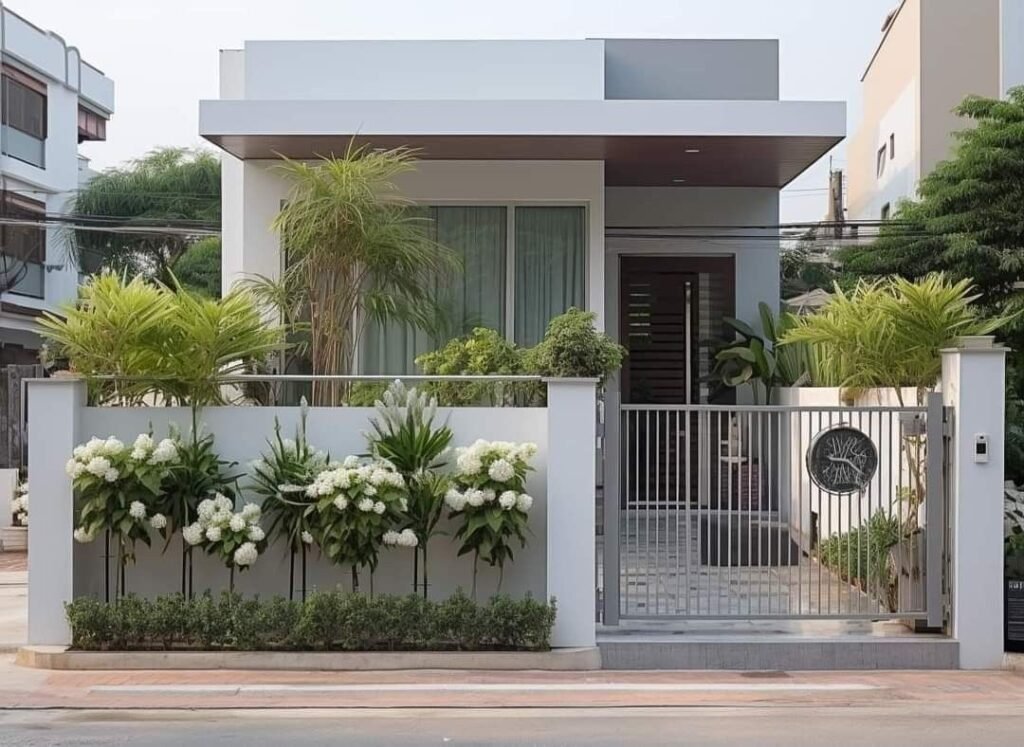
- upgrade lighting with intention, not quantity
Outdoor lighting is often approached the wrong way. People either ignore it completely or overdo it with bright, mismatched fixtures.
A frugal approach focuses on placement, not volume.
Instead of installing multiple lights, choose 2–3 key areas:
- The front door
- The pathway
- A focal point (tree, wall, or feature)
Solar lights can work well if placed strategically. The goal isn’t to flood the area with light but to create layers—soft illumination that guides movement and highlights structure.
Think of it like this:
Bad lighting:
- Too bright
- No clear purpose
- Creates glare
Good lighting:
- Soft, warm tones
- Highlights specific areas
- Leaves some shadows for depth
Lighting doesn’t just improve visibility—it changes how the entire space feels at night.
- revive what already exists before replacing anything
Before buying anything new, take inventory of what’s already outside your home.
Old benches, planters, railings, even fences—these are often discarded prematurely when they just need attention.
A simple restoration checklist:
- Clean thoroughly (pressure wash or scrub)
- Sand rough surfaces
- Repaint or reseal
This applies especially to wood. A faded wooden bench can look nearly new after sanding and staining. Metal railings can transform with a coat of matte black paint.
The key insight: deterioration often looks worse than it is. Surface-level wear doesn’t mean structural failure.
- create a pathway that feels intentional
Pathways guide movement, but they also guide perception. A poorly defined path can make a home feel neglected, even if everything else is in decent shape.
You don’t need expensive stone to create a path that works. Consider:
- Stepping stones spaced evenly
- Brick patterns using reclaimed materials
- Gravel paths with clear borders
Here’s a simple layout idea:
Entry → stepping stones → focal point (door or seating area)
Consistency matters more than material. Even spacing, straight lines (or clearly curved ones), and defined edges make the path feel planned.
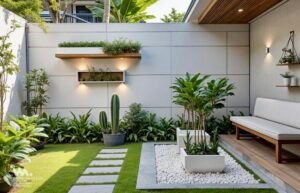
- add vertical elements to break flatness
One of the biggest issues in outdoor spaces is flatness—everything sitting at the same height, creating a dull visual plane.
Vertical elements add dimension. They draw the eye upward and create interest.
Budget-friendly options:
- Tall planters
- Trellises with climbing plants
- Simple wooden frames or arches
- Wall-mounted décor
Even something as simple as a vertical row of hanging pots can shift the feel of a space.
Think in layers:
Ground → mid-height → vertical
When all three are present, the space feels complete.
- use paint to unify mismatched elements
Outdoor areas often accumulate mismatched items over time—different colored pots, furniture pieces, fences, and fixtures.
Instead of replacing everything, use paint to unify.
Pick a limited palette:
- One base color (neutral)
- One accent color
- Optional secondary tone
Then apply it across elements:
- Paint planters the same color
- Match fence and trim tones
- Coordinate furniture
This creates cohesion without requiring new purchases.
A useful rule:
If everything is different, nothing stands out.
If everything relates, the whole space feels intentional.
- introduce seating, even if it’s minimal
A home’s exterior becomes more inviting when it suggests use. Seating is one of the simplest ways to achieve this.
You don’t need a full patio set. Even a small bench or two chairs can change how the space is perceived.
Placement matters:
- Near the entrance for a welcoming feel
- Along a pathway for a pause point
- Under shade for comfort
You can repurpose indoor furniture if treated properly, or build simple seating from pallets or reclaimed wood.
The presence of seating signals that the space isn’t just for passing through—it’s for staying.
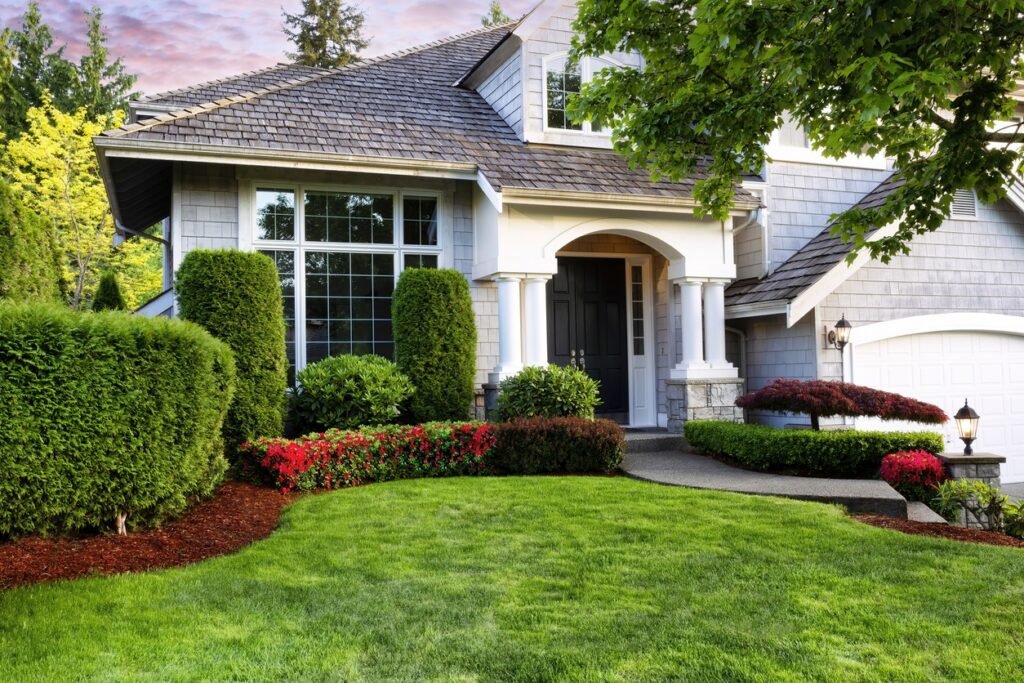
- define borders to eliminate visual clutter
Undefined edges create a sense of mess, even when nothing is technically wrong.
Look at where one area meets another:
- Grass to soil
- Path to garden
- Driveway to yard
If the transition is unclear, it can feel unkempt.
Simple border solutions:
- Bricks laid in a line
- Wooden strips
- Metal edging
- Even a shallow trench
The goal isn’t decoration—it’s separation. Clear edges make each section feel intentional.
A small change in border definition can make a large difference in perceived order.
- work in phases instead of chasing perfection
The biggest mistake frugal renovators make isn’t choosing the wrong materials—it’s trying to do everything at once.
Outdoor improvements benefit from a phased approach.
Phase example:
Week 1: Clean and declutter
Week 2: Paint and repair
Week 3: Define pathways and borders
Week 4: Add lighting and accents
This approach spreads out cost, effort, and decision-making. It also allows you to see what actually improves the space before committing further.
Progress compounds. Each small upgrade makes the next one more effective.
A closing reflection
There’s a quiet advantage to working with constraints. When you can’t rely on expensive materials or large-scale changes, you’re forced to pay attention—to layout, proportion, and purpose.
And that attention often leads to better results.
A frugal outdoor renovation isn’t about making something look expensive. It’s about making it look considered.
If you step back and your home feels more structured, more welcoming, and more “finished” than before, you’ve already succeeded.
FAQs
- how can I improve curb appeal with almost no budget?
Start with cleaning and decluttering. Remove unnecessary items, trim overgrown plants, and clean surfaces. Even without spending money, these actions can significantly improve how your home looks from the street. - is gravel better than grass for a low-budget yard?
In many cases, yes. Gravel requires less maintenance, no watering, and can create a clean, modern look. It’s especially useful in areas where grass struggles to grow. - what’s the most impactful single change I can make?
Painting the front door and improving the entry area often provides the biggest visual impact for the lowest cost. It immediately draws attention and sets the tone for the rest of the home. - how do I choose the right outdoor color scheme?
Stick to a simple palette—one neutral base and one or two accent colors. Look at your home’s existing tones (roof, walls) and choose colors that complement rather than compete. - can I mix different materials without it looking messy?
Yes, but they need to feel related. Use repetition (same color, similar shapes) to tie different materials together. Without that, the space can feel disjointed. - how long does a frugal outdoor renovation typically take?
It depends on the scope, but working in phases over a few weeks is common. The key is consistency—small, steady improvements rather than one large overhaul.