7 Budget Kitchen and Bath Ideas That Feel Luxurious
Luxury in a kitchen or bathroom is often mistaken for price. People assume marble counters, custom cabinetry, imported tile, and designer fixtures are the only way to create that polished, high-end feeling. In reality, luxury is less about what something costs and more about how a space feels when you walk into it. A room can feel expensive because it is calm, cohesive, thoughtfully designed, and visually balanced—not because every finish came from a showroom with impossible pricing.
That is good news for homeowners, renters, and renovators working with real budgets.
Kitchens and bathrooms are two of the most used rooms in any home, and they also happen to be the spaces where smart upgrades make the biggest visual impact. A small change in lighting can make a basic vanity feel custom. A simple cabinet refresh can make an older kitchen look tailored and refined. Even details as small as hardware, paint tone, and mirror shape can shift a room from ordinary to elevated.
The secret is knowing where to spend, where to save, and how to make affordable choices look intentional.
The best budget-friendly upgrades do not try to imitate luxury in an obvious way. They borrow the language of high-end design—clean lines, layered textures, warm lighting, restraint, and quality-looking finishes—then apply it in practical, affordable ways. That is what creates the illusion of expense. It is not about pretending something is more costly than it is. It is about designing with enough confidence and consistency that the room feels considered.
Below are seven budget kitchen and bath ideas that deliver that upscale feeling without draining your savings. These are not gimmicks. They are practical, design-driven updates that work because they improve the visual experience of a room in ways people instinctively associate with comfort and quality.
1. Upgrade Hardware Like It’s Jewelry for the Room
One of the fastest and most affordable ways to make a kitchen or bathroom feel expensive is to replace outdated hardware. Drawer pulls, cabinet knobs, faucet handles, towel hooks, and even toilet paper holders may seem minor, but they function like jewelry in a room. These details catch the eye more often than people realize.
In older kitchens and baths, hardware is often the first thing dating the space. Tarnished brass, builder-grade chrome, flimsy knobs, or mismatched finishes can make the whole room feel neglected. Swapping them out creates an immediate shift.
The key is consistency.
Choose one finish and repeat it throughout the space. Matte black feels modern and tailored. Brushed brass adds warmth and softness. Satin nickel is timeless and forgiving. Even polished chrome can feel upscale when used intentionally and paired with clean lines.
The goal is not to make everything flashy. The goal is to make the room feel edited.
In kitchens, long cabinet pulls often feel more expensive than small knobs, especially on lower drawers. In bathrooms, matching the faucet, cabinet pulls, mirror frame, and towel bar creates a cohesive look that feels custom.
This is where many budget remodels go wrong: too many finishes competing in one room. Chrome faucet, black mirror, brass pulls, bronze sconces. Each piece may look fine on its own, but together they create visual noise. Luxury almost always feels quieter than that.
A more restrained approach makes a bigger impression.
If replacing all hardware at once is not realistic, start with the most visible elements. Kitchen cabinet pulls and bathroom vanity hardware usually make the strongest impact for the lowest cost.
Small detail, major payoff.
Luxury often lives in the finishing touches.
2. Use Paint to Create a Custom, High-End Look
Paint is still one of the most powerful budget tools in design, and nowhere is that more obvious than in kitchens and bathrooms.
A fresh coat of paint can completely alter how expensive a space feels. It can brighten a dark bathroom, soften a harsh kitchen, modernize dated cabinets, and create the kind of tailored atmosphere people usually associate with custom design.
But the trick is not just painting. It is choosing the right color.
Budget spaces often look budget because they rely on flat, default shades—bright contractor white, cool gray, or beige that has no depth. High-end spaces usually use paint with more nuance. Think warm whites, soft greige, muted sage, smoky blue, clay tones, or charcoal with undertones.
These shades create dimension.
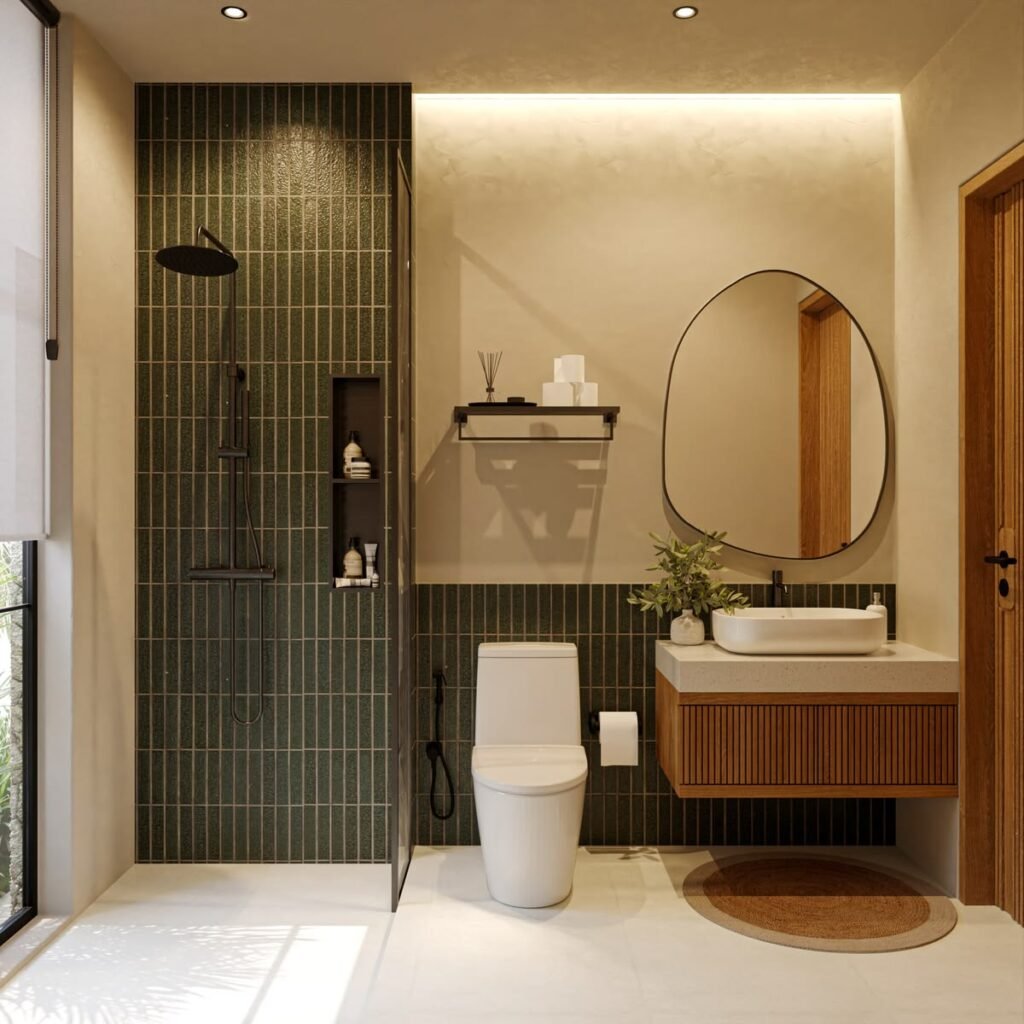
A warm white in a bathroom can make inexpensive tile look cleaner and more intentional. A moody deep green on lower kitchen cabinets can make laminate counters feel more grounded and refined. A soft taupe wall behind a simple vanity can make the room feel calm and elevated.
Color affects perception more than people expect.
In bathrooms, painting the vanity instead of replacing it is one of the smartest low-cost upgrades available. An old oak vanity in a dated finish can feel instantly updated in deep navy, warm mushroom, muted olive, or matte black.
In kitchens, painted cabinets often deliver more visual impact than expensive countertop changes.
Another overlooked move: paint the ceiling.
A bathroom ceiling in a soft tonal shade rather than plain white can make the room feel intentional and layered. In smaller powder rooms, this can create a cocoon-like effect that feels boutique and dramatic.
Paint is inexpensive, but when used well, it can completely change the character of a room.
That is one of the clearest definitions of affordable luxury.
3. Layer Lighting Instead of Relying on One Harsh Fixture
Nothing makes a kitchen or bathroom feel cheaper faster than bad lighting.
A single overhead fixture, especially one with cool-toned bulbs, can flatten every surface in the room. It exaggerates flaws, kills warmth, and makes even beautiful finishes feel sterile.
Luxury lighting is rarely about one statement fixture. It is about layers.
High-end spaces usually combine ambient lighting, task lighting, and accent lighting to create softness and depth. The good news is this can be recreated on a budget more easily than most people think.
Start by changing the bulbs.
This is the simplest upgrade and one of the most overlooked. Warm white bulbs instantly make kitchens and bathrooms feel more inviting. Cooler bulbs tend to create a clinical effect, especially in bathrooms.
Then consider layering.
In bathrooms, wall sconces beside a mirror create a much more flattering and expensive look than a single overhead vanity bar. Even affordable sconces can look elevated when placed properly and paired symmetrically.
In kitchens, under-cabinet lighting is one of the most effective upgrades for making the room feel custom. It adds warmth, improves function, and creates that soft layered glow people associate with high-end kitchens.
Battery-powered or plug-in options make this possible without major electrical work.
Pendant lighting is another opportunity. Replacing a dated fixture above a sink or island can dramatically shift the tone of the room. You do not need oversized chandeliers or dramatic sculptural pieces. Simple, clean pendants in glass, metal, or linen-inspired finishes often look more expensive than ornate designs.
Lighting should make the room feel calm, not overexposed.
That subtle difference is what creates atmosphere.
And atmosphere is what people usually interpret as luxury.
4. Mix Textures to Add Depth and Sophistication
One reason budget spaces often feel flat is because everything is visually doing the same thing.
Too many smooth surfaces. Too many hard finishes. Too much shine. Too little contrast.
Luxury interiors tend to feel richer because they layer textures. Not clutter. Texture.
This matters in kitchens and bathrooms because these rooms naturally contain many hard materials—tile, porcelain, metal, glass, stone. When every surface is equally glossy or cold, the room can feel sterile.
Texture adds softness, warmth, and complexity.
In kitchens, this might mean pairing smooth countertops with a matte backsplash, adding wood cutting boards on display, using woven stools, or styling with ceramic vessels instead of plastic containers.
In bathrooms, texture can come from ribbed glass, linen shower curtains, waffle towels, wood trays, stone soap dishes, or a matte vanity finish.
These are not expensive changes, but they create visual layering.
That layering is what makes a room feel designed rather than assembled.
One of the easiest ways to make a budget bathroom feel luxurious is to replace synthetic-looking accessories with tactile ones. A resin soap pump can look generic. A ceramic or stone one feels considered. A thin bath mat feels temporary. A plush woven one feels intentional.
In kitchens, even countertop styling affects perception. A few well-chosen items—a wooden board, a ceramic bowl, a glass oil bottle—feel more refined than visible packaging, plastic utensils, and countertop clutter.
Luxury often comes from what is removed as much as what is added.
Texture works best when it feels natural and restrained.
The goal is not to fill every surface.
It is to create enough contrast that the room gains depth.
5. Make Inexpensive Materials Look Intentional
Not every budget kitchen gets quartz counters. Not every bathroom gets marble tile. That does not mean the space cannot feel elevated.
The difference lies in how materials are used.
Inexpensive materials tend to look cheap when they are trying too hard to imitate something else. Faux finishes that mimic luxury poorly usually draw attention to what they are not.
A smarter approach is to use affordable materials honestly and style them well.
Laminate can look clean and tailored when paired with strong hardware and minimal clutter. Ceramic tile can feel elegant when the shape and grout are chosen carefully. Stock cabinetry can feel custom when painted well and topped with thoughtful details.
Intentionality matters more than material status.
Simple subway tile remains one of the most budget-friendly and versatile options in kitchens and baths, but its final look depends on execution. Basic white subway tile can feel builder-grade or boutique depending on layout, grout color, and surrounding finishes.
Stacked vertically feels more modern. Dark grout adds contrast. Warm white grout softens the effect.
The same tile, entirely different outcome.
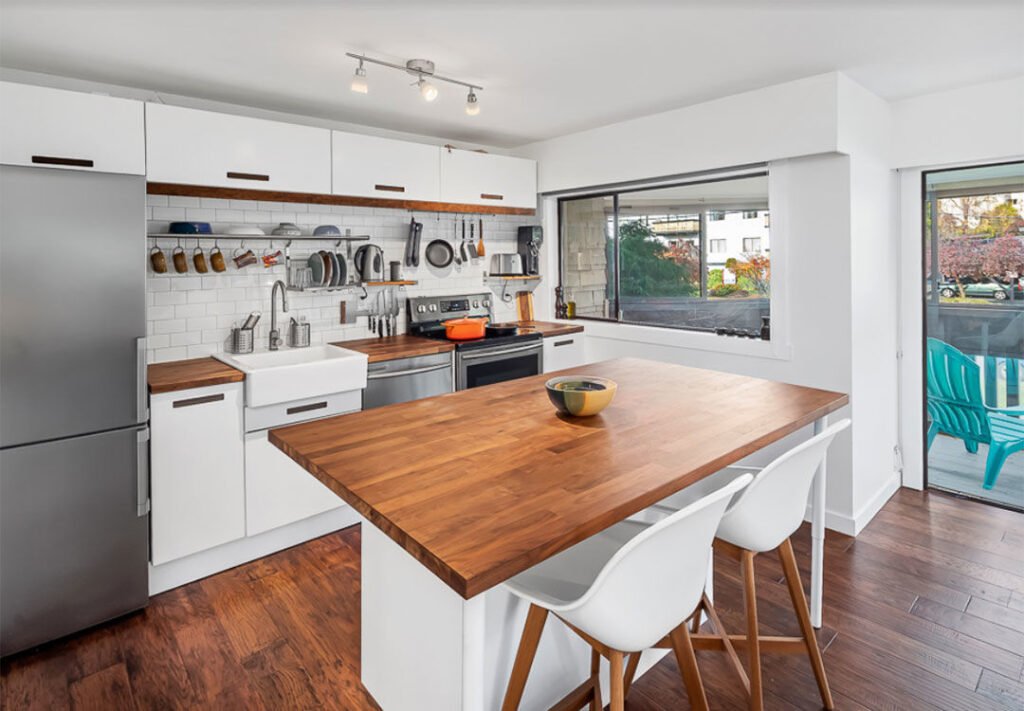
Large-format porcelain can mimic stone beautifully at a fraction of the cost. Affordable butcher block can look rich and warm when sealed properly. Peel-and-stick wallpaper in a powder room can create a custom moment for very little money.
The trick is not choosing the most expensive-looking material.
It is choosing materials that work together in a way that feels deliberate.
That is what people notice.
Most people do not walk into a room and identify exact price points. They respond to cohesion, proportion, and atmosphere.
Design the room well, and affordable materials stop reading as compromise.
They start reading as style.
6. Add One Statement Element That Anchors the Room
A room does not need ten expensive features to feel elevated.
Often, it needs one.
One visual anchor can make the entire room feel more luxurious by giving the eye a focal point. This is one of the most effective designer tricks for creating impact on a budget.
Instead of spreading money thinly across too many upgrades, choose one feature that feels strong and intentional.
In a bathroom, this might be a dramatic mirror, a sculptural light fixture, a rich vanity color, or a striking wallpaper wall.
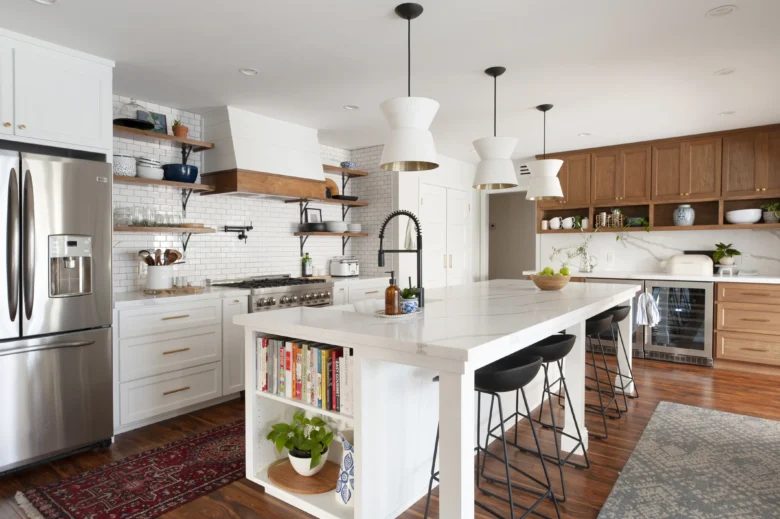
In a kitchen, it could be a bold pendant, a beautifully styled open shelf, a custom-looking range hood treatment, or a standout backsplash area behind the stove.
The point is not extravagance.
It is emphasis.
Luxury spaces often feel memorable because they know where to direct attention. Budget spaces often feel forgettable because everything competes equally or nothing stands out at all.
A statement element creates hierarchy.
That hierarchy makes the room feel designed.
Even something as simple as an oversized mirror can completely shift a bathroom. A basic builder mirror often makes the room feel generic. Replacing it with an arched mirror, rounded rectangle, or thin-framed oversized option adds instant polish.
In kitchens, one well-styled shelf can do more than an entire wall of cluttered decor. A few stacked dishes, a framed piece of art, and one ceramic vase can create a focal point that feels thoughtful and editorial.
The most luxurious rooms are rarely the busiest.
They simply know what deserves attention.
Choose one moment and let it carry visual weight.
That alone can change the entire room.
7. Edit Ruthlessly and Style with Restraint
Clutter is one of the fastest ways to make any kitchen or bathroom feel cheaper.
Luxury is not just about what is in a room. It is also about what is not.
This is where editing becomes essential.
Even beautiful finishes lose impact when surrounded by visual noise. Too many products on the counter, too many colors, too many exposed tools, too many decorative items competing for space—these things make a room feel smaller, busier, and less refined.
High-end spaces tend to feel calm because they are edited.
In kitchens, that means clearing counters as much as possible. Store what you can. Decant pantry staples into simple containers. Keep only the most useful and visually pleasing items visible.
In bathrooms, remove excess packaging, mismatched bottles, and countertop clutter. Use trays to group essentials. Transfer products into cleaner containers if possible. Fold towels neatly. Hide what does not need to be seen.
This is not about making a room look staged.
It is about making it feel intentional.
Restraint creates clarity.
And clarity reads as luxury.
One candle, one tray, one small vase, one framed print. That usually has more impact than ten decorative objects fighting for attention.
The same rule applies to open shelving.
Open shelves can feel beautiful and custom, but only when styled sparingly. Too much on display quickly turns visual.
The most luxurious kitchens and bathrooms feel effortless because they are not trying to prove anything.
They are calm. Clean. Balanced.
That feeling costs very little to create.
It just requires discipline.
The Real Secret to Budget Luxury
The most expensive-looking kitchens and bathrooms are not always the ones with the highest renovation budgets.
They are the ones with the clearest point of view.
That is what creates luxury: intention.
A room feels high-end when every choice looks considered. When finishes relate to one another. When lighting is warm. When materials feel balanced. When clutter is controlled. When the room knows what it is trying to say.
That kind of design does not require unlimited money.
It requires consistency, restraint, and attention to detail.
Budget-friendly luxury is not about faking expensive taste. It is about understanding what actually makes a room feel good to be in.
And more often than not, that has less to do with cost than people think.
A kitchen can feel luxurious because the lighting is soft, the counters are clear, and the hardware feels tailored in the hand.
A bathroom can feel luxurious because the towels are plush, the mirror is striking, and the palette is calm.
These are not extravagant upgrades.
They are thoughtful ones.
And thoughtful design almost always feels more luxurious than expensive design without direction.
That is the real advantage of working with a budget.
It forces better choices.
FAQs
1. What is the cheapest way to make a kitchen look more luxurious?
The most affordable upgrade is usually changing hardware and decluttering countertops. New cabinet pulls, warm lighting, and a cleaner visual layout can make a kitchen feel dramatically more refined without requiring a full renovation.
2. Can a bathroom feel luxurious without replacing the vanity?
Yes. Painting the vanity, changing the hardware, upgrading the mirror, and improving lighting can completely transform how the vanity looks. In many cases, these changes create the appearance of a custom piece for a fraction of the cost.
3. What paint colors make kitchens and bathrooms look expensive?
Warm whites, muted greens, soft taupes, smoky blues, and rich charcoal tones tend to look more elevated than stark white or flat gray. Colors with subtle undertones usually create more depth and warmth, which helps a room feel more polished.
4. Is it better to spend money on fixtures or decor?
Fixtures usually offer a better return because they affect both function and visual impact. Hardware, faucets, mirrors, and lighting tend to make a bigger difference than decorative accessories alone.
5. How do you make inexpensive tile look high-end?
Focus on layout, grout color, and surrounding finishes. Even affordable tile can look elevated when installed cleanly and paired with cohesive materials. Simple tile often looks more expensive when the overall design feels intentional.
6. What makes a room feel luxurious more than anything else?
Consistency. A luxurious room usually feels calm, cohesive, and edited. Matching finishes, layered lighting, thoughtful styling, and reduced clutter often make a stronger impression than expensive materials alone.