10 Proven Kitchen and Bath Tips for Better Functionality
A kitchen or bathroom can look impressive in photos and still feel frustrating in daily life. A beautiful backsplash does not help if the counters are always crowded. A stylish vanity means very little if drawers jam, lighting casts shadows, or there is never enough storage for the basics. In the end, functionality is what turns a good-looking room into one that actually works.
That is what separates a space you admire from a space you enjoy using every day.
The kitchen and bathroom are two of the hardest-working areas in any home. They are used early in the morning, late at night, and often by more than one person at the same time. Meals are prepared, messes are cleaned, routines are repeated, and storage gets tested constantly. When these spaces are thoughtfully planned, everything feels easier. When they are not, even simple tasks become more time-consuming than they should be.
The good news is that better functionality does not always require a full renovation. In many cases, the biggest improvements come from smart layout decisions, better storage habits, stronger lighting choices, and practical material upgrades. These are not trend-driven ideas that disappear in a year. They are proven strategies that make kitchens and bathrooms easier to use, easier to maintain, and far more comfortable over time.
This guide covers ten practical kitchen and bath tips that improve the way these spaces function in real life. These are the kinds of upgrades that reduce clutter, save time, improve movement, and make everyday routines feel smoother without sacrificing style.
1. Prioritize workflow before finishes
Most people begin planning by choosing colors, tile, hardware, or cabinet styles. It is understandable because finishes are visual, exciting, and easy to imagine. But the real success of a kitchen or bathroom starts with workflow.
If the layout is awkward, no amount of expensive marble or designer fixtures will fix it.
In the kitchen, workflow is about how efficiently you move between the sink, refrigerator, and cooktop. This is often called the work triangle, and while every kitchen does not need a perfect triangle, the principle still matters. The goal is to minimize unnecessary steps while keeping the space comfortable for more than one person.
A functional kitchen layout allows you to:
- Prep food near the sink
- Store cookware near the range
- Keep utensils close to where they are used
- Access the refrigerator without blocking work zones
- Move easily between cooking, cleaning, and serving
In bathrooms, workflow matters just as much. Think about how the room is used in sequence. Where do you stand to wash your face? Is there enough elbow room at the vanity? Can someone shower while another person uses the sink? Is towel storage close enough to reach without dripping across the floor?
A functional bathroom layout should support:
- Easy access to daily essentials
- Clear movement around the vanity
- Convenient towel placement
- Separation between wet and dry zones
- Enough clearance for doors and drawers to open fully
Before choosing decorative elements, spend time evaluating how the room actually functions. It is the least glamorous part of planning, but it has the biggest long-term impact.
2. Maximize vertical storage, not just floor space
When storage runs short, most people think horizontally. They add baskets under the sink, crowd cabinets, or stack items deeper into drawers. The smarter move is usually to think vertically.
Walls hold more storage potential than most homeowners use.
In kitchens, vertical storage can dramatically improve organization:
- Extend upper cabinets closer to the ceiling
- Add open shelving for frequently used items
- Use tall pantry pull-outs
- Install hooks or rails for utensils
- Add vertical dividers for trays, cutting boards, and baking sheets
This approach makes better use of wall height while freeing up lower cabinets for heavier items.
Bathrooms benefit just as much from vertical storage:
- Install medicine cabinets with recessed depth
- Add shelving above the toilet
- Use tall linen towers instead of wider vanities
- Mount wall hooks for robes and towels
- Use narrow pull-out storage between fixtures
Vertical storage reduces clutter without increasing visual heaviness, especially when designed with clean lines and a consistent finish.
The biggest advantage is that it creates more usable space without requiring a larger footprint. In smaller kitchens and baths, that can make an enormous difference.
3. Choose drawers over deep lower cabinets
Traditional lower cabinets waste more usable space than most people realize. Items get pushed to the back, forgotten, or stacked awkwardly. Reaching into them often means kneeling, digging, and moving several things just to access one.
Drawers solve this problem better than shelves.
In kitchens, deep drawers make lower storage far more practical for:
- Pots and pans
- Mixing bowls
- Food containers
- Small appliances
- Plates and serving dishes
Instead of crouching and searching, you pull the contents out toward you and see everything at once.
This one change often improves kitchen functionality more than expensive upgrades.
In bathrooms, drawer-based vanities make daily routines easier because:
- Toiletries are visible and organized
- Hair tools are easier to store
- Cleaning supplies stay accessible
- Small items are less likely to become cluttered
Shallow top drawers for personal items and deeper bottom drawers for bulk storage create a far more efficient setup than open cabinet voids.
If a full cabinet replacement is not possible, retrofit pull-out organizers can offer many of the same benefits.
4. Improve lighting in layers
Lighting is one of the most overlooked parts of functional design. Many kitchens and bathrooms rely too heavily on a single ceiling fixture, which creates shadows, uneven brightness, and poor task visibility.
Good lighting should work in layers.
The most functional spaces use three types of lighting:
- Ambient lighting for overall brightness
- Task lighting for focused work
- Accent lighting for depth and visibility
In kitchens:
- Ceiling lights provide general illumination
- Under-cabinet lighting improves prep visibility
- Pendant lights help define islands and work zones
- Interior cabinet lighting improves storage access
Under-cabinet lighting is one of the most effective kitchen upgrades because it directly improves how the workspace functions.
In bathrooms:
- Overhead lighting fills the room
- Vanity lighting improves grooming tasks
- Shower lighting improves visibility and safety
- Night lighting adds comfort after dark
One of the most common bathroom mistakes is placing a single light above the mirror. It casts shadows on the face and makes shaving, makeup, and skincare harder. Side-mounted vanity lights or evenly distributed front lighting work much better.
Layered lighting makes both rooms feel more usable, more comfortable, and more refined.
5. Keep countertops as clear as possible
Cluttered counters make even large rooms feel cramped and inefficient. The more items left out, the less workspace you actually have.
Functionality improves immediately when surfaces stay open.
In kitchens, countertop clutter usually comes from:
- Small appliances
- Cooking oils and spices
- Paper towels
- Knife blocks
- Mail, chargers, and miscellaneous items
The solution is not just decluttering. It is creating better homes for the things that tend to accumulate.
Smart kitchen fixes include:
- Appliance garages
- Drawer organizers for tools
- Built-in knife storage
- Pull-out spice storage
- Charging drawers for devices
In bathrooms, counters often collect:
- Toothbrushes
- Skincare
- Hair tools
- Cosmetics
- Hand soap backups
A more functional bathroom keeps only daily essentials visible and stores the rest in drawers, mirrored cabinets, or under-sink compartments.
Clear counters create more usable work surface, simplify cleaning, and make both rooms feel calmer.
6. Use durable, low-maintenance materials where it matters most
A material may look stunning in a showroom and become exhausting in everyday life. High-maintenance surfaces often create more stress than satisfaction in busy kitchens and bathrooms.
Functionality improves when materials match the demands of the space.
In kitchens, prioritize:
- Countertops that resist stains and heat
- Flooring that handles spills and traffic
- Cabinet finishes that wipe clean easily
- Backsplashes that are simple to maintain
In bathrooms, focus on:
- Water-resistant flooring
- Mold-resistant grout
- Durable vanity finishes
- Easy-clean shower surfaces
Low-maintenance does not mean unattractive. It means selecting materials that continue to perform without constant upkeep.
This is especially important in high-use households where durability matters more than showroom perfection.
Choose materials based on how they live, not just how they look on installation day.
7. Add smart storage zones for daily routines
Not all storage should be generic. The most functional kitchens and bathrooms are organized around routines, not just categories.
That means storing items where they are actually used.
In kitchens, create dedicated zones:
- Prep zone near knives, boards, bowls, and trash
- Cooking zone near utensils, oils, and pans
- Cleaning zone near dishwasher supplies and towels
- Breakfast zone near mugs, coffee, and toaster
- Serving zone near plates and flatware
This reduces movement and keeps tasks more efficient.
In bathrooms, routine-based zones work just as well:
- Morning grooming zone
- Shower essentials zone
- Cleaning supply zone
- Linen zone
- Makeup or skincare zone
When items are stored where they are used, routines become faster and spaces stay more organized with less effort.
This is one of the simplest but most effective ways to improve functionality.
8. Do not underestimate ventilation
Ventilation is rarely the first thing people think about, but it has a major effect on comfort, cleanliness, and long-term maintenance.
In kitchens, poor ventilation allows:
- Grease buildup
- Lingering odors
- Excess heat
- Moisture accumulation
A properly sized range hood improves air quality, protects finishes, and makes cooking more comfortable.
In bathrooms, ventilation is even more important because excess moisture leads to:
- Fogged mirrors
- Peeling paint
- Mold growth
- Musty odors
- Damaged finishes
A strong exhaust fan with proper venting helps preserve the room and improves comfort every day.
Ventilation may not be visible, but poor ventilation becomes noticeable very quickly.
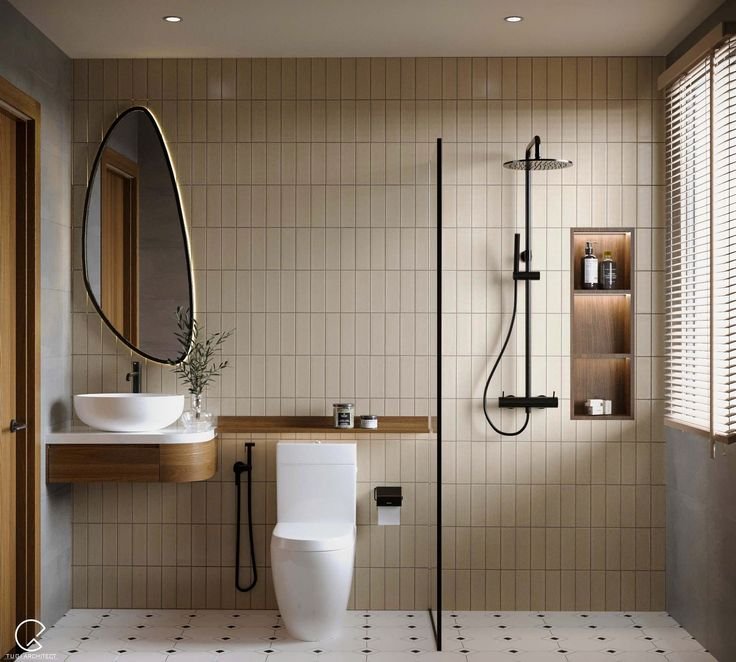
9. Improve access with better hardware and fixture choices
Function is often decided by the details people touch every day.
Cabinet hardware, faucet design, drawer slides, hinges, and handles all influence how easy a room is to use. These details may seem minor, but they affect daily comfort more than many decorative upgrades.
In kitchens:
- Soft-close hinges reduce noise and wear
- Full-extension drawer slides improve access
- Pull handles are easier than small knobs
- Pull-down faucets improve sink usability
In bathrooms:
- Lever handles are easier to use than twist knobs
- Drawer organizers reduce small-item clutter
- Soft-close toilet seats improve comfort
- Wall-mounted faucets free counter space
Better hardware improves function through smoother movement, easier access, and less frustration.
These are small upgrades with outsized impact.
10. Leave room to move
No matter how attractive a space is, poor clearance makes it feel cramped and inefficient.
Function depends on movement.
A kitchen should allow enough room to:
- Open appliances fully
- Pass behind seated guests
- Move between work zones
- Cook with more than one person present
A bathroom should allow enough room to:
- Open drawers and doors comfortably
- Step out of the shower safely
- Move around the vanity without crowding
- Use fixtures without obstruction
Many layout problems are not caused by lack of square footage, but by poor spacing.
Even small kitchens and baths can function beautifully when movement is prioritized.
The goal is not just fitting everything in. It is making sure the room still works once everything is there.
Final thoughts
The most functional kitchens and bathrooms are not always the biggest, most expensive, or most dramatic. They are the ones that make everyday life easier.
That is what good design is supposed to do.
A better kitchen helps meals happen more smoothly, cleanup feel less tiring, and storage stay manageable. A better bathroom simplifies routines, reduces clutter, and makes mornings less chaotic.
These improvements do not require chasing trends or copying showroom designs. They come from practical choices that support the way people actually live.
When function leads, everything else works better.
And in the rooms used most often, that matters more than anything else.
FAQs
1. What is the most important factor in kitchen functionality?
The most important factor is workflow. A kitchen should allow smooth movement between prep, cooking, cleaning, and storage areas. Even a beautiful kitchen becomes frustrating if the layout slows down basic tasks.
2. How can I make a small bathroom more functional?
Focus on vertical storage, drawer organization, layered lighting, and clear countertops. Small bathrooms function better when clutter is minimized and every inch is used intentionally.
3. Are drawers really better than lower cabinets?
In most cases, yes. Drawers provide easier access, better visibility, and more efficient storage. They reduce bending and make it easier to organize everyday items.
4. What kind of lighting works best in kitchens and bathrooms?
Layered lighting works best. Combine ambient lighting for overall brightness, task lighting for work areas, and accent lighting for added visibility and comfort.
5. How do I reduce clutter without adding more space?
Use smarter storage rather than more storage. Add zones, improve drawer organization, use vertical space, and keep only frequently used items visible.
6. Is ventilation really that important in kitchens and bathrooms?
Yes. Good ventilation improves air quality, reduces moisture problems, protects surfaces, and helps prevent mold, odors, and long-term damage. It is one of the most important but overlooked functional upgrades.